To improve the carbon footprint of activated carbon
December 17, 2022
DER STANDARD | Wednesday, December 2, 2020, Research Special p. 23
Activated carbon is an important aid in sewage treatment plants and is usually obtained from hard coal. Tyrolean researchers now want to be able to produce it locally in the communities where it is needed.
Among end consumers, activated charcoal is primarily known for its medical applications. In cases of diarrhea or poisoning, small, black charcoal tablets are administered to bind bacteria and toxins in the digestive tract. However, the range of applications is much wider. The adsorption potential of activated carbon, i.e. its ability to bind substances from liquids or gases on its surface, is particularly in demand in waste water and exhaust air purification. Activated carbon can separate drug residues or hormonal substances in sewage treatment plants, purifies flue gas in incineration plants and is even used in gas masks. It is also used in cosmetics and as a food coloring.
Demand is particularly high in wastewater treatment plants. Here it would make sense if the local demand of a municipality could be covered by local production that also meets ecological criteria. This is a central idea of a new Josef Ressel Center for the production of powdered activated carbon, which was recently opened at the Management Center lnnsbruck (MCl). A team of researchers led by Angela Hofmann, FH Professor of Process and Energy Technology, is working on the topic together with four business partners. Ressel Centers are set up by the Doppler Society, with funding coming from the Ministry of Economic Affairs and the company partners.
Currently, the origin of activated carbon is anything but environmentally friendly. "The global market is dominated by suppliers in East Asia. It is extracted from fossil coal," explains Hofmann. The idea is now to produce the activated carbon in wood gas power plants - as an additional product of local energy production. This would produce the material from municipal waste and residual wood, reducing dependencies and improving the municipalities'carbon footprint.
Powdered activated carbon is carbon in the form of tiny particles. Due to their porous structure, they have a very large surface area - around 1ooo square meters per gram.
This structure is created by targeted thermal treatment at temperatures of up to 9oo degrees Celsius after chemical preparation of the surface.
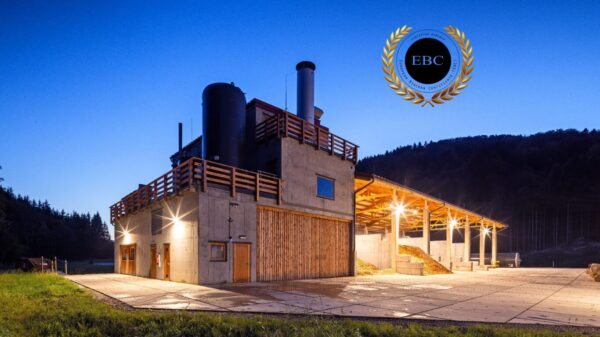
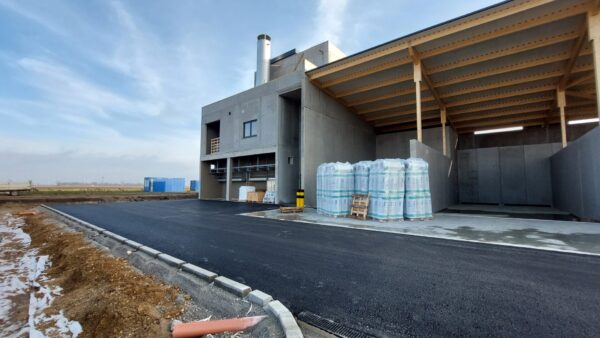
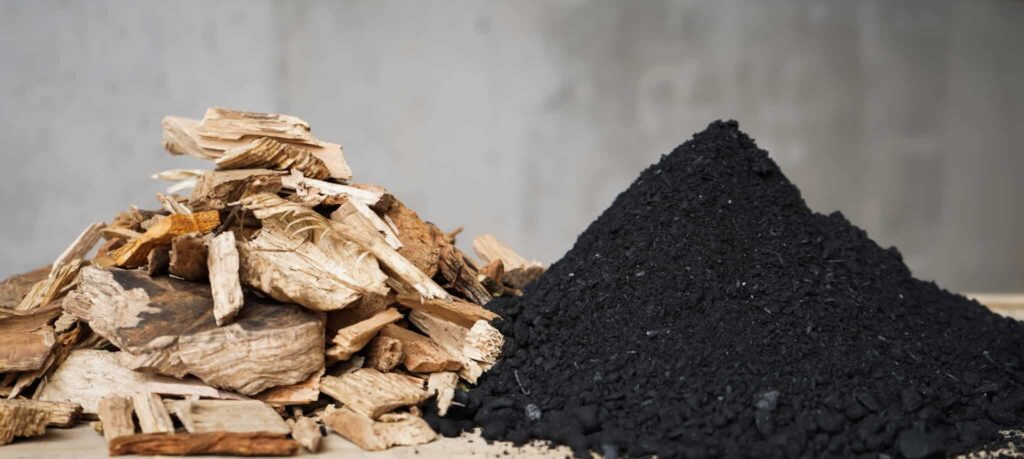
In wood gas power plants, wood residues are fed water vapor and only small amounts of oxygen at high temperatures, resulting in a process gas with proportions of methane, hydrogen or carbon monoxide, which is further utilized for energy. This also produces a coal residue. "Five to ten percent of the initial mass usually remains in the reactor as a powder with a high carbon content," explains Hofmann. "However, the surface area of the particles is only 1oo to 4oo square meters per gram." In this form, the powdered carbon is used to improve agricultural soils, for example.
Enlarge surface
In order to turn it into powdered activated carbon, the surface area of the particles must therefore be greatly increased. Hofmann and her team are investigating whether the parameters of the gasification process could be modified to produce the desired residue. "You would have to change the temperatures, reactor design and the way the gasification medium is introduced in order to achieve the goal," explains the researcher. On the other hand, a second reactor process could also be set up after gasification to turn the residues into activated carbon. Another focus of the Ressel Center is on post-treatment of the activated carbon to prepare it for its respective applications. ln the course of chemical impregnation, the water-repellent surface of the particles could be made more hydrophilic so that they can mix better with water and adsorb dissolved substances, explains Hofmann. In addition, the activated carbon is to be optimized for the absorption of heavy metals and fungicides.
A major advantage of this approach is that wood gas power plants can be used more flexibly. "This gives you a certain degree of process variability," says Hofmann. "Depending on demand, the energy output could be maximized in winter, while in summer heat or electricity generation could be reduced in favour of activated carbon production."