Green Carbon in metallurgy
September 29, 2025
#Energy transitionMetallurgy is facing a historic transformation: while the steel industry is responsible for 5-7 percent of global greenhouse gas emissions, Green Carbon offers a revolutionary alternative to fossil coals. With its reverse power plants, SYNCRAFT shows how regional forest residues can be turned into sustainable carbon for the defossilization of the metal industry.
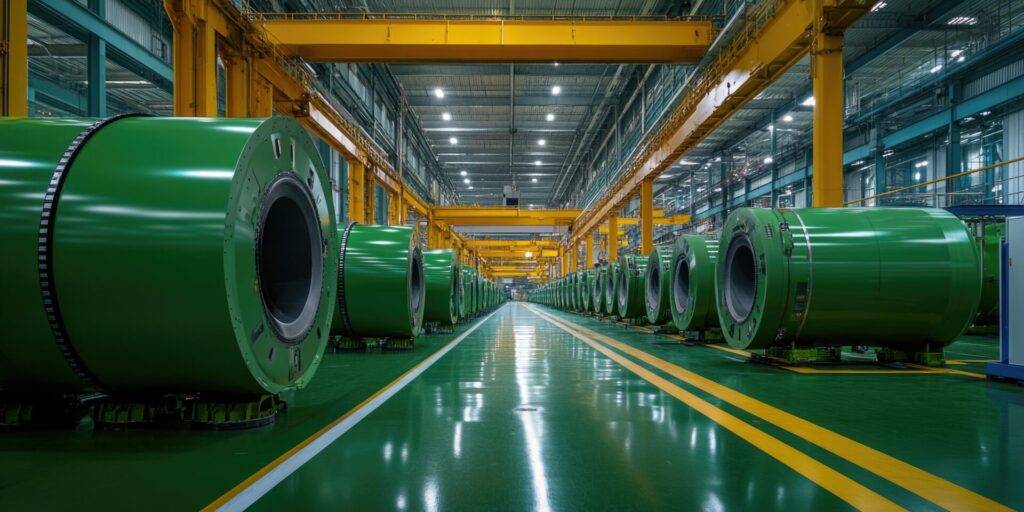
Green Carbon: The path to sustainable steel production
Is metallurgy on the brink of transformation? While the steel industry is responsible for 5-7 percent of global greenhouse gas emissions, the Green Carbon offers an innovative alternative to fossil coal. Why we need coal in metallurgy at all and whether and how this transformation is linked to our reverse power plants - that and more follows now.
Why do we need green carbon in metallurgy?
The green carbon produced in the SYNCRAFT reverse power plants is a high-quality, sustainable raw material that can also replace fossil coals in metallurgical processes, in addition to many other areas of application. With a carbon content of around 90 % and a calorific value of around 29 MJ/kg, it offers ideal properties for steel production and other metallurgical applications.
Core features for metallurgy:
- High carbon content (approx. 90 %)
- Low ash content for optimum process control
- Controlled reactivity for precise applications
- Uniform particle size distribution
- Defossilization

Applications of green carbon in metallurgy
- Steel production: replacement for reduction coke
In traditional steel production, coke is used as a reducing agent in the blast furnace to reduce iron ore to pig iron. Green Carbon can replace fossil coke and thereby:
- Reduce CO₂ emissions by up to 30
- Reducing dependence on fossil fuels
- Making the process more environmentally friendly
- Ensure process stability through controlled properties
- Direct reduction: partner for green hydrogen
In modern direct reduction processes, Green Carbon optimally complements green hydrogen:
- Reduction of hydrogen demand
- Improving energy efficiency
- Stabilization of the process temperatures
- Electric arc furnaces
In electric steelworks, Green Carbon serves as a:
- Carburizing agent for carbon adjustment
- Slag formers for optimum metallurgy
- Energy source for temperature stabilization
The advantages of green carbon for metallurgy
The steel and metal industry is one of the biggest producers of CO₂ emissions worldwide. A large proportion of these are caused by the use of fossil coal in the blast furnace process. Green carbon opens up a completely new path here: it makes it possible to replace fossil raw materials and thus reduce CO₂ emissions. This not only improves the carbon footprint of metallurgy, but also creates a stable, future-proof supply of a versatile raw material.

- Defossilization
The decisive advantage: Green Carbon is obtained in the Reversepowerplant by binding and storing around 30 % of the CO₂ originally contained in the forest residues in the long term. While conventional steel production uses fossil coal, which causes additional CO₂ emissions through combustion, Green Carbon uses CO₂ that has already been stored. This means that no fossil carbon is extracted and no "new" CO₂ is added to the atmosphere - a clear step towards true defossilization and climate-friendly steel production. - Technical advantages
In addition to its climate-positive effect, Green Carbon also has impressive material properties. Compared to fossil coal, it has a significantly lower sulphur content and lower concentrations of heavy metals. This leads to lower emissions and protects production facilities. At the same time, it offers consistent quality and improved processing properties, which ensures reliable and consistently high performance in metallurgical processes. - Economic aspects
Green Carbon also offers clear economic advantages. As a regionally available raw material, it enables stable prices and reduces dependence on volatile international coal markets. This ensures planning security - a decisive factor in a globally competitive industry. In addition, the use of green carbon enhances the sustainability profile of companies and improves their image among customers, partners and investors, who are increasingly paying attention to climate-positive production methods.
With green carbon, metallurgical processes can not only be made more sustainable, but also technically and economically more efficient. This makes it a central component of a defossilized and climate-friendly future for the steel and metal industry.
Metallurgy undergoes a GREEN rethink
Green Carbon is becoming increasingly strategically important in the European context. It is considered a key technology for a competitive and climate-neutral industry. The initiative Biochar Europe describes in a recent paper how biochar - and therefore also Green Carbon - can contribute to shaping a resilient, climate-neutral and resource-efficient European economy.
Biochar Europe thus underlines the importance of carbon-based negative emission technologies such as SYNCRAFT's reverse power plants, which combine renewable energy with permanent CO₂ storage potential.
The market potential
The global market for sustainable carbon in metallurgy is growing exponentially:
- European Green Deal prescribes CO₂ neutrality
- EU's Carbon Border Adjustment Mechanism (CBAM) favors climate-friendly products
- Industrial demand for green alternatives continues to rise
The bottom line
Metallurgy is one of the industries with the highest energy and carbon requirements - and therefore also one of the largest CO₂ emitters. Green Carbon opens up a realistic opportunity to replace fossil coal in steel and metal production. Although the carbon is burned in the process and releases CO₂, the decisive factor is that it is not fossil carbon that has been bound for millions of years, but biogenic carbon from renewable raw materials. This means that no additional "new" CO₂ is released into the atmosphere, but a climate-friendly cycle is created.
In addition to this contribution to defossilization, Green Carbon also offers technical advantages such as lower sulphur and heavy metal content and stable quality. In economic terms, regional availability ensures greater security of supply and price stability.
This makes Green Carbon an important building block for making steel production more sustainable - and for gradually making the transformation of metallurgy more climate-friendly.
Sources and further links
Internal links:
External sources:
- Decarbonization of the steel industry - European Investment Bank
- Carbonization and biochar - Fraunhofer UMSICHT
- Green coal - new energy
- Hydrogen instead of coal - Green steel of the future - BDEW
- Biochar for industrial use - Carbstream
- Steel and metal industry - biochar zero
Scientific references:
- Rita Khanna et al: "Biochars in iron and steel industries" - Current research on biochar applications in metallurgy
- EU Green Deal and Carbon Border Adjustment Mechanism (CBAM) - Legal framework for sustainable metallurgy


January 21, 2026
Top Topics 2026: Will we reach the energy transition point?
New legal frameworks, increasing expansion targets for renewable energies, and growing pressure to defossilize will bring change to the energy sector in 2026. At the same time, it is becoming increasingly clear that the energy transition will not be achieved through individual technologies, but through their interaction. Renewable energies, bioenergy, Green Carbon, decarbonization, defossilization, and smart Minus-CO₂ are converging into a single system. This is precisely where the top topics for our industry in 2026 lie.
read more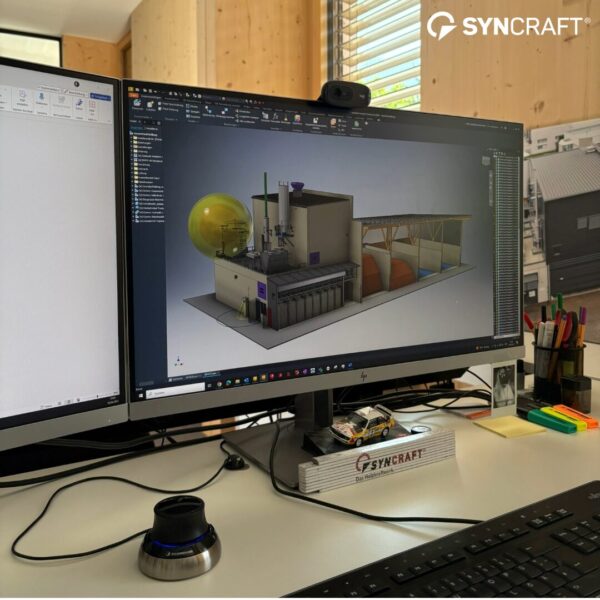
January 2, 2026
Blueprint Wallern: Construction diary phases 1+2
How is a Reversepowerplant actually created? What steps are required from the initial idea to climate-positive energy production in ongoing operation? We provide a clear answer to this question in our new blog series "B(l)aupause." Using the project in Wallern as an example, we take you to the construction site and show you transparently, practically, and step by step how regional forest residues are turned into forest residues modern energy system for electricity, heat, and green carbon. A construction diary about planning, cooperation, and the interaction of many trades—and about how defossilization and decarbonization are being implemented in concrete terms.
read more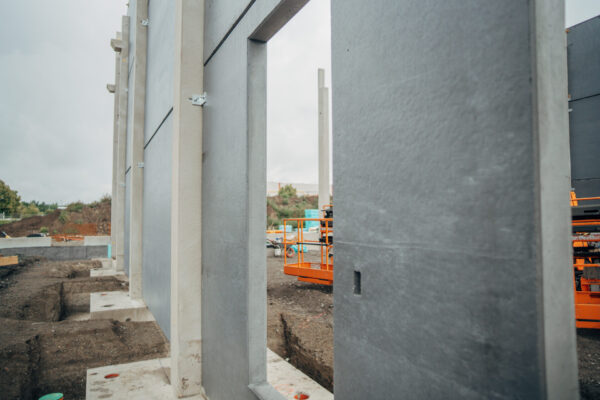
December 15, 2025
Climate-positive precast concrete elements: MARKGRAF x ecoLocked x SYNCRAFT
Climate-positive construction—what does that mean? The pilot project by MARKGRAF and ecoLocked in Kemnath provides a clear answer. The striking dark color pigments in the concrete are not just a design statement—they are visible proof of permanently bound CO₂ and active climate protection. This is made possible by green carbon, which is produced in our reverse power plants. When added to concrete, it creates a permanent CO₂ sink. Specifically, this means that over 10.68 tons of CO₂ have been permanently bound in this project. The black pigments in the concrete highlight the added value of climate protection and send a strong visual signal to the construction industry and a functioning bioeconomy.
read more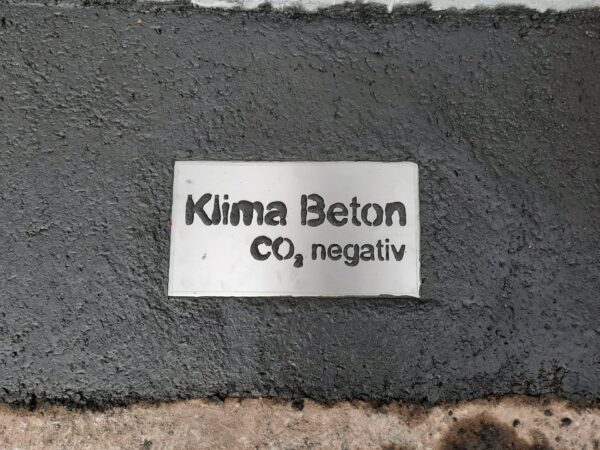
August 21, 2025
Building materials with green carbon: the future of construction
Conventional building materials are responsible for around 11% of global CO₂ emissions. To change this, we need innovative, new building materials - which not only save CO₂ emissions, but also bind CO₂ in the long term. And thus become a CO₂ sink. This is made possible by building materials that contain green carbon, for example.
read more
August 13, 2025
Certificates for climate protection
From A for application to Z for certification: REACH registration, European Biochar Certificate, C-Sink certificates - confirmed quality against climate change? We were one of the first system manufacturers to be recognized as an "Endorsed System Provider" by Carbon Standards International (CSI) in 2024. But what does this mean in concrete terms, which certifications are important and why are they so essential in our industry?
read more
July 17, 2025
Austria's future of renewable energy
Today, renewable energies are far more than just a vision for tomorrow - in many places they are already the present. But how does Austria compare internationally? Which technologies are driving the energy transition, what are the biggest challenges and how can the energy transition succeed in the long term?
read more