Top Topics 2026: Will we reach the energy transition point?
January 21, 2026
#Energy transitionNew legal frameworks, increasing expansion targets for renewable energies, and growing pressure to defossilize will bring change to the energy sector in 2026. At the same time, it is becoming increasingly clear that the energy transition will not be achieved through individual technologies, but through their interaction. Renewable energies, bioenergy, Green Carbon, decarbonization, defossilization, and smart Minus-CO₂ are converging into a single system. This is precisely where the top topics for our industry in 2026 lie.

Will climate protection require more than just energy in 2026?
It almost seems as if 2026 will mark a decisive turning point in the energy transition. After all, the deadline for achieving climate targets is fast approaching. This makes it all the more important that, despite the flood of news and urgent issues, we do not lose sight of one thing: the well-being of our planet determines our existence. And that applies globally, regardless of individual hotspots. With this fact in mind, we delve into a complex yet logical topic: a climate-friendly energy system needs more than just energy. Security of supply, system stability, and the careful use of resources will take center stage in 2026.
The key question today and in the future is therefore no longer whether renewable energies will grow, but how they can interact effectively. And this has nothing to do with us being in an industry bubble. The top topics for 2026 in our industry affect (almost) all sectors of the economy.
1. Systematic energy transition: We are leaving technological isolation behind us in the last year.
The massive expansion of photovoltaics and wind power is a central pillar of the energy transition – but in 2026, it will become clear that pure expansion alone is not enough. With increasing shares of fluctuating generation, the requirements for system stability, storage capacity, and controllability are growing. The energy transition is thus evolving from a purely generation issue to a system issue, with a focus on security of supply, grid integration, and sector coupling. In this context, decarbonization means not only generating low-emission electricity, but also building an energy system that functions reliably even during peak load times and dark doldrums.
Bioenergy is taking on a new role in this context:
-
as flexibly controllable renewable energy
-
as a stabilizing element in the energy system
-
as a bridge between electricity, heat, and material flows
The energy transition is therefore less a question of individual technologies and more a question of intelligently combining all renewable sources.
2. Bioenergy: Backbone rather than marginal solution
For a long time, bioenergy was primarily regarded as a supplement to wind and solar power. However, in 2026 it is becoming increasingly clear that bioenergy is not a niche component, but rather systemically relevant. It plays a key role, particularly in the context of defossilization—i.e., the gradual replacement of fossil fuels. This is because bioenergy is renewable, storable, and can be used as needed. It combines regional raw material availability with technical predictability, enabling an energy transition that is not only climate-friendly but also economically viable.
Wood-based bioenergy—which is also generated in SYNCRAFT reverse power plants—offers:
-
predictable, demand-driven energy generation
-
Use of regional waste materials
-
Linking with industry, heating networks, and infrastructure
- In the case of SYNCRAFT: renewable energy, Green Gas green carbon (also: biochar)
This makes bioenergy a strategic building block for communities, industry, and energy systems that need to be not only climate-friendly but also resilient.
3. Green Carbon: Sustainable climate protection is more than just energy
Climate change cannot be solved by the energy sector alone. In 2026, therefore, greater focus will be placed on a raw material that combines energy, industry, and climate protection: Green Carbon (biochar). It exemplifies an expanded concept of climate protection that combines decarbonization and defossilization. Green Carbon fossil carbon in industrial applications and at the same time enables biogenic carbon to be retained in the system in the long term – instead of being released again as CO₂.
Green Carbon several functions simultaneously:
-
Defossilization of industrial processes (e.g., metallurgy, building materials)
-
Permanent carbon storage in long-lasting applications (CO2 sink)
-
Coupling energy production and material use
- NegativeCO2 through active removal from the atmosphere
Green Carbon thus closes Green Carbon crucial gap in the energy transition: it makes it possible to keep carbon in the system instead of continuing to use fossil sources.
4. Meaningful negative business:CO₂ reduction becomes negativeCO₂.
While climate strategies have long focused on avoiding emissions, the focus in 2026 is increasingly shifting to active carbon management. Decarbonization means not only emitting lessCO₂, but also redesigning existing carbon cycles. Biogenic systems in particular open up the possibility of either using carbon as a material or binding it in the long term. This marks a transition from pure emission reduction to solutions that also enable defossilization andCO₂ substitution.
The focus is on:
-
Use of biogenic carbon (green carbon) instead of fossil sources
-
Combination of energy generation and CO₂ sequestration
-
Clear distinction between emission reduction and carbon removal
- BCR combined with BECCS
Biochar applications and integrated energy systems demonstrate howCO₂ can not only be avoided, but also systematically sequestered or replaced—especially in sectors that are difficult to decarbonize.

5. Sector coupling becomes common practice
What has long been discussed will become reality in 2026: electricity, heat, gas, industry, and materials will converge. The energy transition in 2026 is characterized by the realization that sector boundaries are becoming increasingly blurred. They can no longer be viewed separately if decarbonization and defossilization are to succeed. Successful projects rely on integrated concepts in which energy is used multiple times, waste heat is utilized, and material flows are intelligently linked. Sector coupling is thus moving from a theoretical concept to a practical implementation strategy.
Successful energy transition projects are characterized by:
-
Combined power and heat generation
-
Use of waste heat
-
Integration into industrial processes
-
Multiple use of resources
This is precisely where scalable solutions are developed that combine climate protection, economic efficiency, and security of supply.
6. Regional value creation: Energy transition in the here and now
In addition to technological issues, the regional dimension of the energy transition will also gain in importance in 2026. Geopolitical uncertainties, volatile markets, and global supply chains clearly demonstrate the limitations of fossil fuel dependencies. Regional renewable energy systems—such as Reversepowerplants make an important contribution to defossilization by utilizing local resources and keeping value creation locally. This makes the energy transition more tangible, more accepted, and more resilient.
The focus is on:
-
Use of forest residues energy wood
-
regional energy and material cycles
-
local value creation and acceptance
Decentralized, renewable energy systems such as Reversepowerplants, which use regional forest residues energy wood, not only strengthen the climate, but also regions, communities, and industrial sites.
Conclusion: 20206 = Energy + Decarbonization + Systems Thinking
2026 marks a turning point in the energy transition. While decarbonization has long been defined primarily by the expansion of renewable electricity generation, the focus is now shifting to the defossilization of entire value chains. It is no longer just a matter of reducing emissions, but of consistently replacing fossil raw materials with renewable alternatives—in energy, industry, and material applications.
The energy transition is thus evolving from an electricity transition to an energy and carbon transition. Fluctuating renewables continue to form the foundation, but it is only the combination with controllable bioenergy, sector coupling, and green carbon that enables stable, resilient, and scalable systems. Green Carbon a key gap in this process: it combines energy generation with industrial defossilization and keeps biogenic carbon in the cycle permanently, instead of mobilizing fossil carbon again.
Successful climate strategies for 2026 Energy,negative CO2, and industry working together—regionally, integrated, and open to technology. This will not only make the energy transition lower in emissions, but also structurally more robust. Away from isolated solutions, toward holistic systems that enable both decarbonization and defossilization. Reverse is forward.
Sources
-
German Renewable Energy Federation (BEE): 2026 as a key year for the energy transition
-
Der Standard: Renewables on the rise – advancing climate protection in 2026
-
Carbon Direct (2024): VCM & Carbon Removal Outlook
-
IEA Bioenergy: The role of bioenergy in integrated energy systems
(All sources are used for thematic classification, as of 2024/2025.)


January 2, 2026
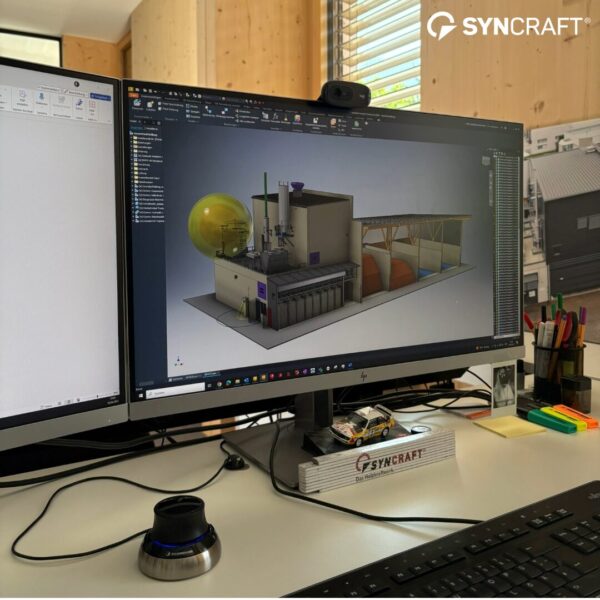
Blueprint Wallern: Construction diary phases 1+2
How is a Reversepowerplant actually created? What steps are required from the initial idea to climate-positive energy production in ongoing operation? We provide a clear answer to this question in our new blog series "B(l)aupause." Using the project in Wallern as an example, we take you to the construction site and show you transparently, practically, and step by step how regional forest residues are turned into forest residues modern energy system for electricity, heat, and green carbon. A construction diary about planning, cooperation, and the interaction of many trades—and about how defossilization and decarbonization are being implemented in concrete terms.
read more
December 15, 2025
Climate-positive precast concrete elements: MARKGRAF x ecoLocked x SYNCRAFT
Climate-positive construction—what does that mean? The pilot project by MARKGRAF and ecoLocked in Kemnath provides a clear answer. The striking dark color pigments in the concrete are not just a design statement—they are visible proof of permanently bound CO₂ and active climate protection. This is made possible by green carbon, which is produced in our reverse power plants. When added to concrete, it creates a permanent CO₂ sink. Specifically, this means that over 10.68 tons of CO₂ have been permanently bound in this project. The black pigments in the concrete highlight the added value of climate protection and send a strong visual signal to the construction industry and a functioning bioeconomy.
read more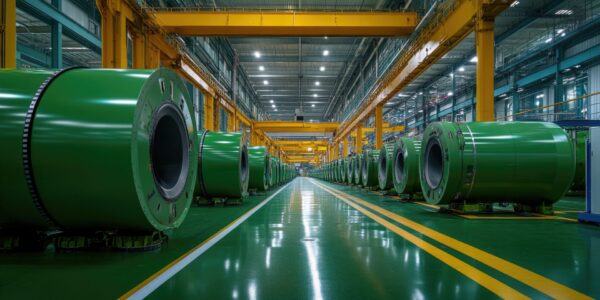
September 29, 2025
Green Carbon in metallurgy
Metallurgy is facing a historic transformation: while the steel industry is responsible for 5-7 percent of global greenhouse gas emissions, Green Carbon offers a revolutionary alternative to fossil coals. With its reverse power plants, SYNCRAFT shows how regional forest residues can be turned into sustainable carbon for the defossilization of the metal industry.
read more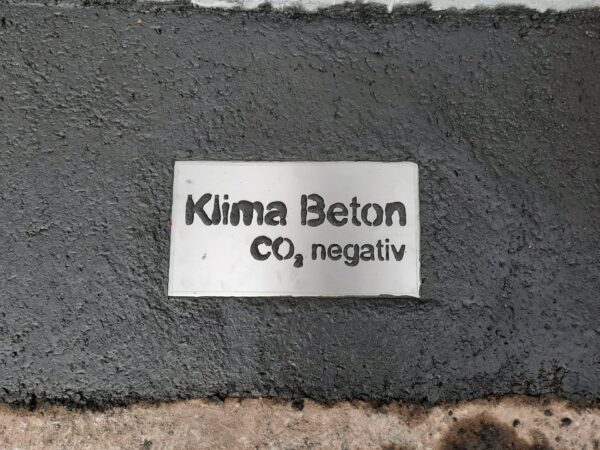
August 21, 2025
Building materials with green carbon: the future of construction
Conventional building materials are responsible for around 11% of global CO₂ emissions. To change this, we need innovative, new building materials - which not only save CO₂ emissions, but also bind CO₂ in the long term. And thus become a CO₂ sink. This is made possible by building materials that contain green carbon, for example.
read more
August 13, 2025
Certificates for climate protection
From A for application to Z for certification: REACH registration, European Biochar Certificate, C-Sink certificates - confirmed quality against climate change? We were one of the first system manufacturers to be recognized as an "Endorsed System Provider" by Carbon Standards International (CSI) in 2024. But what does this mean in concrete terms, which certifications are important and why are they so essential in our industry?
read more
July 17, 2025
Austria's future of renewable energy
Today, renewable energies are far more than just a vision for tomorrow - in many places they are already the present. But how does Austria compare internationally? Which technologies are driving the energy transition, what are the biggest challenges and how can the energy transition succeed in the long term?
read more