Climate tone: From climate killer to climate saver
October 12, 2021
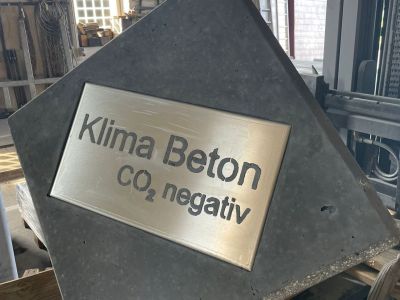
What if there was climate sound.
Are we only solving the challenges of our time with brand new innovations and technologies? Or does the further development of tried and tested technologies also have a positive impact on the climate, for example? We asked ourselves these questions together with the engineering firm Axel Preuß from northern Germany. To find answers, we looked at a well-known and indispensable building material in the construction industry: concrete.
Concrete, and above all the cement contained in concrete, is ultimately responsible for around 8% [1] of global greenhouse gas emissions. Infrastructure and housing will be key issues in the coming years. Whether concrete will go down in history as a climate saver or a climate killer will be decided by developments we make today or in the coming years. In any case, climate concrete could make a significant contribution to achieving climate targets.
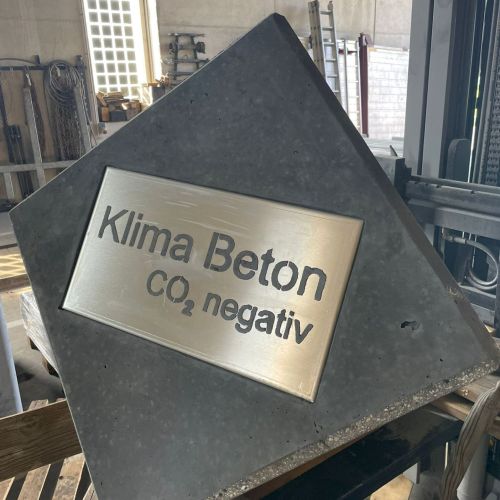
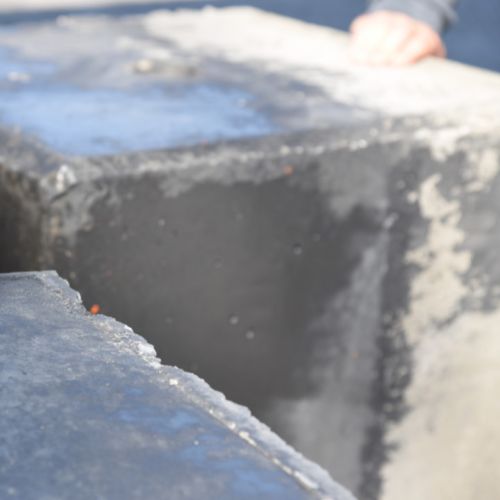
Let the future begin: First conventionally produced CarStorCon® from Kopf Kies+Beton in cooperation with EnergieWerk Ilg, Carbon Instead, EBI, Carbonfuture, SynCraft and Ingenieurbüro Axel Preuß; right picture: in direct comparison left half climate concrete right half conventional concrete
Concrete? Yes, but green!
Alternatives to sand and gravel are already being used for concrete production. The replacement of cement through the use of granulated blast furnace slag and similar options is being pursued and optimized with great effort. This will also help to further reduce the current footprint of around 521 kgCO2/t of cement! In view of risingCO2 prices, even options for capturing the emittedCO2 at the chimney of the cement plant using CCS (Carbon Capture and Storage) technology are very popular and will certainly be used in the coming decades. But to generate truly climate-positive effects with concrete, major changes are needed. In2ovation, together with the engineering firm Axel Preuß, SynCraft and other partners, is focusing on the use of sustainably sourced, technical carbon, which will ensure that concrete becomes a tangible carbon sink in the long term! In other words, it becomes climate-friendly concrete, as the following illustration shows. [2]
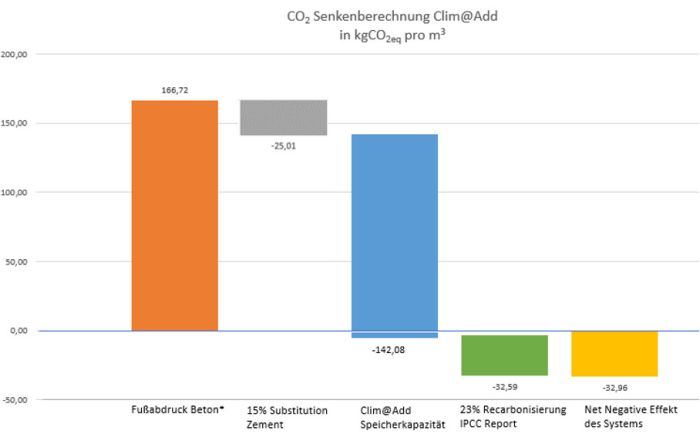
We have succeeded in tailoring the technical carbon in such a way that a climate-positive effect of concrete is achieved overall. The properties of the concrete have also been significantly improved, as the first, repeated series of tests have already shown. In terms of both compressive strength and surface properties, the climate concrete is in no way inferior to its conventional counterpart. "On the contrary, it looks as if significant improvements can be achieved with it," says Axel Preuß, concrete technologist from Osteel, North Germany.
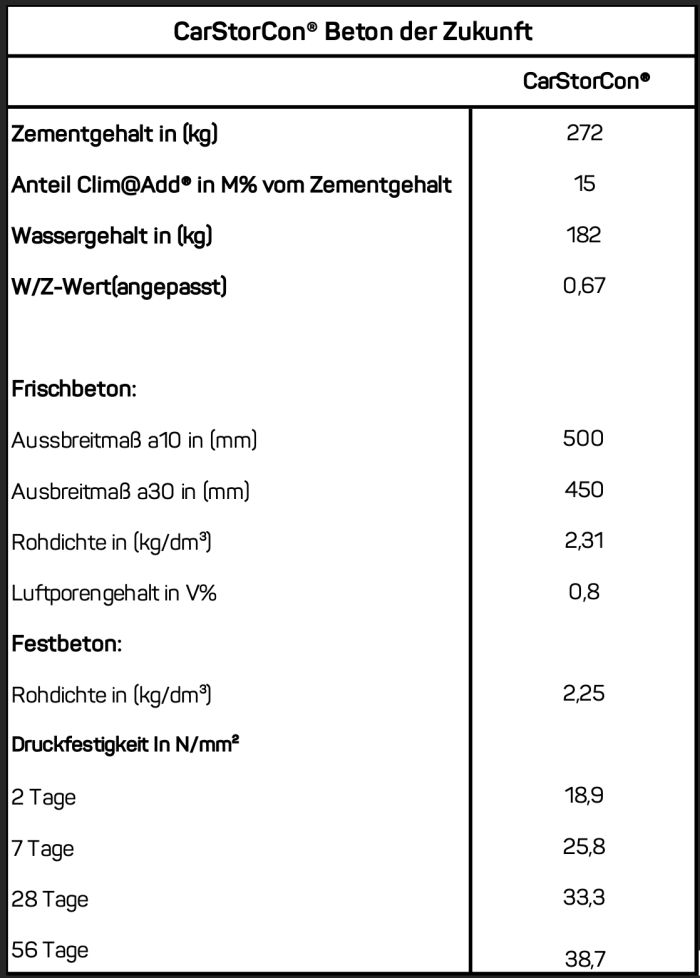
This is the birth of CarStorCon® technology! The first climate-friendly concrete that is not only climate-positive, but also offers added value compared to conventional concrete products. Carbon Storage Concrete technology is a tangible, sustainable and permanent carbon sink [3], a real NET, Negative Emission Technology.
CarStorCon® technology - How does it work?
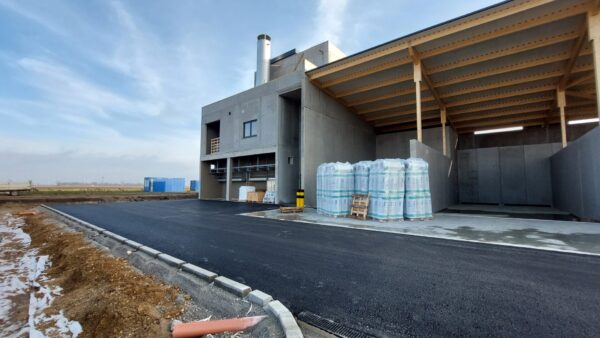
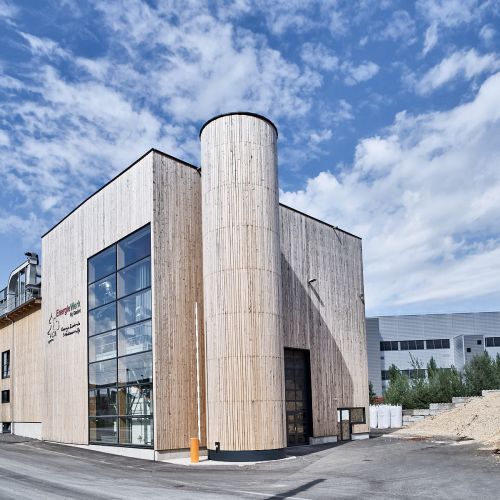
The technology is based on the developed Clim@Add® aggregate. It consists of 98% technical carbon. This technical carbon is the third product of the climate-positive energy systems built by our company. In addition to the carbon from forest residues , these systems also provide sustainable, regional electricity and heat, making them among the most modern wood-fired power plants.
By substituting 15% cement with 15% Clim@Add®, it is possible to produce climate-positive concrete that is at least equal to a corresponding reference concrete (C25/30) in terms of its properties, and can even surpass it. It is ideal for processing and thus offers a wide range of application options. In addition to the climate-positive properties that the concrete obtains through the use of Clim@Add, the technical properties of the concrete also have a positive influence. The high compressive strength of the CarStorCon® technology is one effect, as are the improved internal curing, the improved sound insulation and the more optimal thermal insulation properties. And, of course, not forgetting the significantly better moisture-regulating properties.
Together for the climate
This technology has what it takes to turn a climate killer into a climate saver. For this to succeed, expertise and effort need to be pooled. In2ovation has adopted the technology and is currently developing a corresponding marketing concept. In a large-scale research project with the Federal Institute for Materials Research and Testing in Berlin, the next development step is to be accompanied so that CarStorCon® can grow up quickly.
Despite all the hurdles that climate-friendly concrete still has to overcome before it can be used as a matter of course in all kinds of areas, one thing is already clear. The path to a concrete that is not only climate-friendly, but even climate-positive, is clear. We just have to finish it together and probably go even further....
The team behind CarStorCon® / project partners:
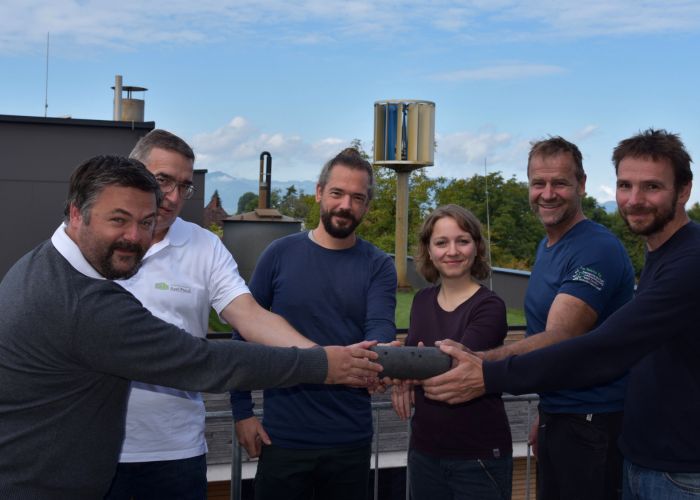
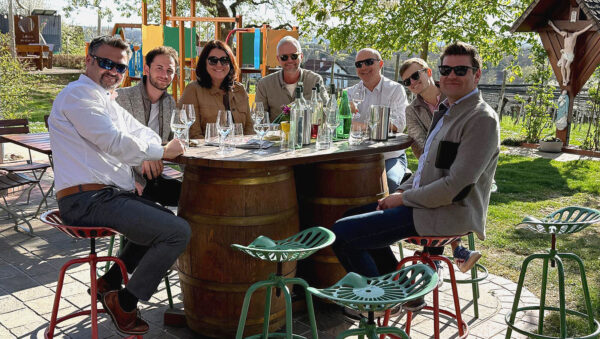
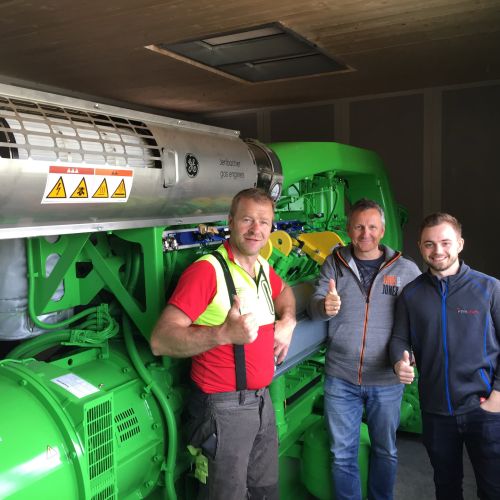
From right to left: Hannes-Junginger Gestrich / Carbonfuture.earth, Tobias Ilg / EnergieWerk Ilg, Julia Roth / Carbon Instead, Harald Bier / EBI, Axel Preuß / Ingenieurbüro Axel Preuß, Marcel Huber / SynCraft
Sources:
[1] WWF Climate Protection in the Concrete and Cement Industry; February 2019, contact person Dr. Erika Bellmann (Climate Protection and Energy Policy WWF Germany; WWF_Klimaschutz_inder_Beton-_und_Zementindustrie_WEB.pdf
[2] Footprint of cement produced in Austria according to the Cement Industry Annual Report 2018/19; Association of the Austrian Cement Industry (VÖZ), TU Wien Science Center, Franz-Grill-Straße 9, O 21; www.zement.at
Recarbonization of concrete:CO2 uptake in cement containing products, ISBN: 978-91-88787-89-7; Background and calculation models for implementation in national greenhouse gas emission inventories; Commissioned by: Cementa AB and IVL research foundation, Report number: B 2309; © IVL Swedish Environmental Research Institute 2021; P.O Box 210 60, S-100 31 Stockholm, Sweden; www.ivl.se
Clim@Add storage capacity of 2.96toCO2eq/to biochar according to EBC Carbon Sink Certificate dated 11.07.2021;
Methodology and exclusion: The calculation was carried out by Kössler-Sustainability-Consulting on the basis of the documentation provided and publicly available as listed above. Subject to change without notice. Verification is being sought.
[3] EBC Carbon Sink certified; C-sinks (european-biochar.org)