Austria's future of renewable energy
July 17, 2025
#Energy transitionToday, renewable energies are far more than just a vision for tomorrow - in many places they are already the present. But how does Austria compare internationally? Which technologies are driving the energy transition, what are the biggest challenges and how can the energy transition succeed in the long term?
Green energy: technologies, trends and tendencies
The fact that there will be no (climate-friendly) way around renewable energy in the future has been accepted both socially and economically. In some places, we are already in the future - in fact, where renewable energy is already being used. But how does Austria compare internationally, which technologies are shaping the energy transition and where do the challenges lie? A comprehensive overview of the current status and future of sustainable energy generation.
Austria's energy transition: Figures that impress
The energy transition in Austria is showing impressive momentum: from 2022 to 2023, electricity generation from renewable energy sources increased by 18.3%. This development positions Austria as one of the pioneers in Europe in the transformation of the energy system.

The current energy mix: diversity as a foundation
Austria already has one of the most sustainable energy mixes in Europe:
- Hydropower: 60% - The traditional cornerstone of Austrian energy generation
- Wind power: 15.4% - rapid growth in recent years
- Photovoltaics: 9.6% - solar boom thanks to improved technology and subsidies
- Bioenergy: ~10% - Often overlooked, but crucial for the base load
- Other: 5% - Geothermal energy and other innovative approaches
Details on this have also been published by energie.gv.at: https://energie.gv.at/energiewende/wie-steht-oesterreich-im-eu-vergleich-beim-ausbau-erneuerbarer-energie-da
Focus on technologies: more than just wind and sun
The energy transition in Austria is based on a diversified portfolio of renewable technologies that goes far beyond the familiar solutions. While wind and solar energy are often in the spotlight, established technologies in combination with innovative technologies together form a future-proof foundation for sustainable energy supply. Why is the combination of all options so important? Only diversity enables us to make optimum use of natural resources while ensuring security of supply.
- Hydropower: the proven giant
Austria makes optimum use of its geographical advantages. With over 3,000 hydropower plants - from large plants to small run-of-river power plants - hydropower remains the backbone of the renewable energy supply. Modern pumped storage power plants also function as gigantic batteries for the electricity system. - Wind power: Upwind in the plains
More and more wind farms are being built, particularly in Burgenland and Lower Austria. Modern turbines achieve capacity factors of over 30% and are becoming even more efficient thanks to intelligent maintenance and remote monitoring. - Photovoltaics: The democratic energy
From rooftop systems to solar parks - photovoltaics is becoming increasingly affordable. The price of solar modules has fallen by over 80% in the last ten years, which has boosted private investment.
The challenges of the energy transition
1. storage
One of the biggest sticking points remains the storage of renewable energy. Wind and sun provide electricity depending on the weather, but not always when it is needed. Austria is therefore investing more in:
- Pumped storage power plants as proven large-scale storage facilities
- Battery storage for fast balancing energy
- Power-to-gas technologies for long-term storage
- Hydrogen as a versatile energy carrier
2. network expansion and digitization
The electricity grid must become more intelligent. Smart grids make it possible to optimally balance fluctuating generation and consumption. Austria is investing billions in grid expansion and the digitalization of the energy infrastructure.
3. acceptance and social change
Change is usually a challenge. The question with the energy transition is not if but when and how quickly this change will take place. And this requires society as a whole. Even if Austrians are very much in favor, opinions still differ when it comes to speed - see the graphic below from the Gallup Institute. This makes it all the more important to raise awareness in order to show that climate protection and economic efficiency can go hand in hand.

Bioenergy: an underestimated energy supplement
While wind and solar still dominate the headlines around renewable energy, bioenergy plays an often underestimated but crucial role. It offers some unique advantages:
- Base load capability: In contrast to wind and solar, bioenergy can supply electricity continuously and thus secure the base load in the electricity grid.
- Regional added value: Biomass from the region creates local jobs and reduces transportation routes. This is an important economic factor, especially in rural areas.
- Versatile raw materials: From energy crops and farm manure to forest residues - the range of usable raw materials is broad. Sustainable cultivation without competing with food production is important.

The energy transition as a joint task: Why only the combination of all technologies will lead to success
As already briefly outlined, the stable energy future lies in the intelligent linking of different sectors. After all, the energy transition is not a competition between different technologies, but a joint task. Only by intelligently combining all available renewable energy sources can we achieve (almost) complete defossilization and decarbonization. How can we imagine this? Hydropower supplies the base load, photovoltaics the midday peak, wind power fills the evening and night hours, and bioenergy provides predictability and storage capacity.
The flexibility of the systems is particularly important here: modern energy solutions must be optimally integrated into existing infrastructures and harmonize with other technologies. This demonstrates the value of hybrid solutions that can fulfill several functions at the same time.
Our contribution to the energy transition: The Reversepowerplants as an intelligent addition
SYNCRAFT Reversepowerplants are an example of what the next generation of renewable energy technologies could look like. In contrast to traditional power plants that burn fossil raw materials and release CO₂ in the process, Reversepowerplants not only generate renewable energy from renewable forest residues or energy wood, but also valuable green carbon, which can either be used in such a way that the green carbon and the storedCO2 are preserved and thus become a permanentCO2 sink - for example in the form of climate clay. Or it can be used as an alternative to fossil raw materials and thus contribute to defossilization, for example in steel production.
There is no one solution: system integration and compatibility
The special feature of the Reversepowerplant technology is its compatibility with existing energy systems. This is because they can be optimally combined with other renewable technologies:
- Combination with heat pumps: The system can act as a base load unit and support heat pumps at peak times
- Integration with wood chip boilers: supplementing existing biomass heating systems for greater efficiency
- Hybrid function with CHP units: Flexible electricity and heat generation as required
- "Daily Sprinter" concept: demand-oriented energy supply at peak times
This flexibility makes Reversepowerplants an important building block in the energy system of the future. They can both supply energy continuously as a base load unit and be ramped up quickly when required.
Multiple benefits for the energy transition
The technology combines several advantages in one system:
- Energy generation from regional, renewable raw materials
- CO₂ storage instead of CO₂ emissions
- Defossilization of industrial processes
- Circular economy through complete utilization of raw materials

European comparison: Where does Austria stand?
In a European comparison, Austria is one of the leaders in renewable energies:
- Denmark leads in wind power (over 50% of electricity)
- Norway dominated by hydropower (96% renewable)
- Germany is a pioneer in the expansion of photovoltaics
- Austria scores with a balanced mix and high efficiency
This diversity shows that there is no single path to the energy transition, but different strategies depending on geographical and economic conditions.
Economic aspects: Renewables as an economic driver
Anyone who is not convinced by climate change alone and does not see enough reasons for an energy transition may be persuaded by the economic factor. After all, renewable energy is no longer just climate protection - it has become an economic factor:
- Jobs in the green sector: In Austria alone, over 40,000 people already work in the renewable energy sector. And the trend is rising sharply.
- Export opportunities for Austrian technology: Austrian companies export know-how and technology all over the world - from hydropower turbines to innovative bioenergy solutions.
- Energy independence as a locational advantage: The fewer fossil fuels that have to be imported, the less dependent the Austrian economy will be on price fluctuations and geopolitical risks.
Conclusion: Together we can make the energy transition work
The figures are quite motivating: Austria is on the right track when it comes to renewable energies. With an electricity mix that is already over 80% renewable and continuous innovations in all areas of sustainable energy generation, the country can establish itself as a European pioneer. The challenges are also well known - from storage and grid expansion to social acceptance. However, with the combination of proven technologies such as hydropower and innovative approaches such as reverse power plants or green hydrogen, Austria is well equipped for the energy future.
The energy transition is more than just the replacement of technologies - it is a social transformation towards greater sustainability, regional value creation and technological innovation.
Sources and further information:


January 21, 2026
Top Topics 2026: Will we reach the energy transition point?
New legal frameworks, increasing expansion targets for renewable energies, and growing pressure to defossilize will bring change to the energy sector in 2026. At the same time, it is becoming increasingly clear that the energy transition will not be achieved through individual technologies, but through their interaction. Renewable energies, bioenergy, Green Carbon, decarbonization, defossilization, and smart Minus-CO₂ are converging into a single system. This is precisely where the top topics for our industry in 2026 lie.
read more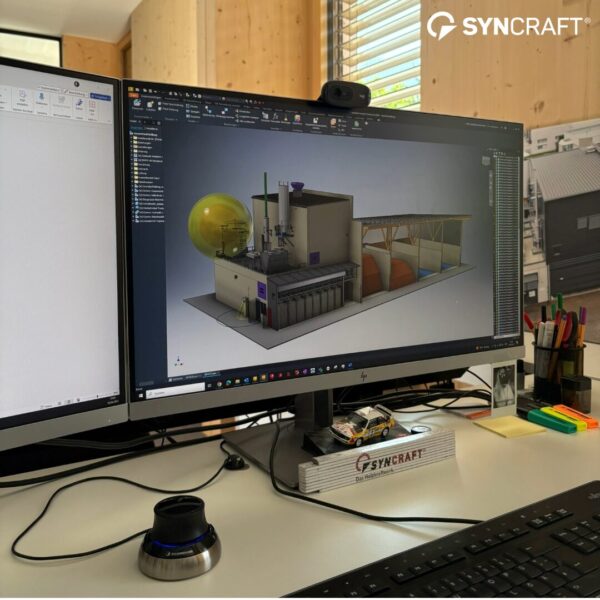
January 2, 2026
Blueprint Wallern: Construction diary phases 1+2
How is a Reversepowerplant actually created? What steps are required from the initial idea to climate-positive energy production in ongoing operation? We provide a clear answer to this question in our new blog series "B(l)aupause." Using the project in Wallern as an example, we take you to the construction site and show you transparently, practically, and step by step how regional forest residues are turned into forest residues modern energy system for electricity, heat, and green carbon. A construction diary about planning, cooperation, and the interaction of many trades—and about how defossilization and decarbonization are being implemented in concrete terms.
read more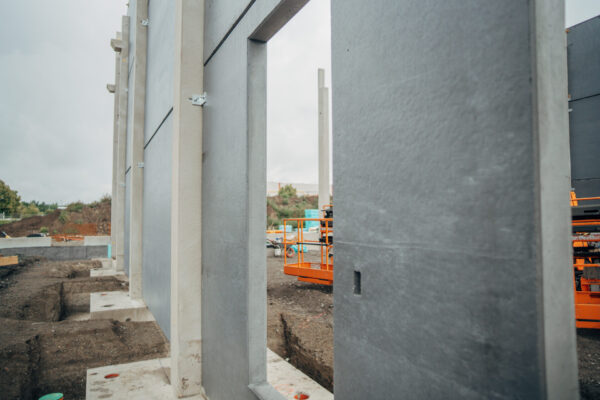
December 15, 2025
Climate-positive precast concrete elements: MARKGRAF x ecoLocked x SYNCRAFT
Climate-positive construction—what does that mean? The pilot project by MARKGRAF and ecoLocked in Kemnath provides a clear answer. The striking dark color pigments in the concrete are not just a design statement—they are visible proof of permanently bound CO₂ and active climate protection. This is made possible by green carbon, which is produced in our reverse power plants. When added to concrete, it creates a permanent CO₂ sink. Specifically, this means that over 10.68 tons of CO₂ have been permanently bound in this project. The black pigments in the concrete highlight the added value of climate protection and send a strong visual signal to the construction industry and a functioning bioeconomy.
read more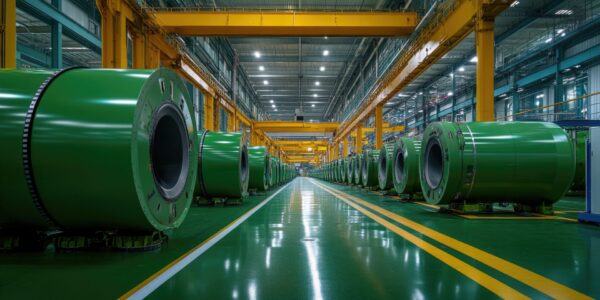
September 29, 2025
Green Carbon in metallurgy
Metallurgy is facing a historic transformation: while the steel industry is responsible for 5-7 percent of global greenhouse gas emissions, Green Carbon offers a revolutionary alternative to fossil coals. With its reverse power plants, SYNCRAFT shows how regional forest residues can be turned into sustainable carbon for the defossilization of the metal industry.
read more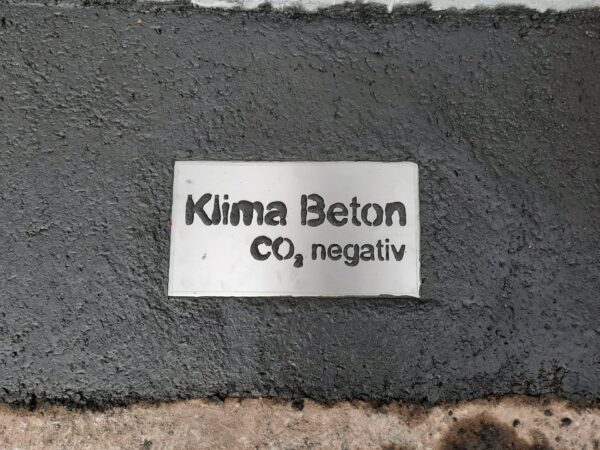
August 21, 2025
Building materials with green carbon: the future of construction
Conventional building materials are responsible for around 11% of global CO₂ emissions. To change this, we need innovative, new building materials - which not only save CO₂ emissions, but also bind CO₂ in the long term. And thus become a CO₂ sink. This is made possible by building materials that contain green carbon, for example.
read more
August 13, 2025
Certificates for climate protection
From A for application to Z for certification: REACH registration, European Biochar Certificate, C-Sink certificates - confirmed quality against climate change? We were one of the first system manufacturers to be recognized as an "Endorsed System Provider" by Carbon Standards International (CSI) in 2024. But what does this mean in concrete terms, which certifications are important and why are they so essential in our industry?
read more