Building materials with green carbon: the future of construction
August 21, 2025
#Energy transition #Climate positiveConventional building materials are responsible for around 11% of global CO₂ emissions. To change this, we need innovative, new building materials - which not only save CO₂ emissions, but also bind CO₂ in the long term. And thus become a CO₂ sink. This is made possible by building materials that contain green carbon, for example.
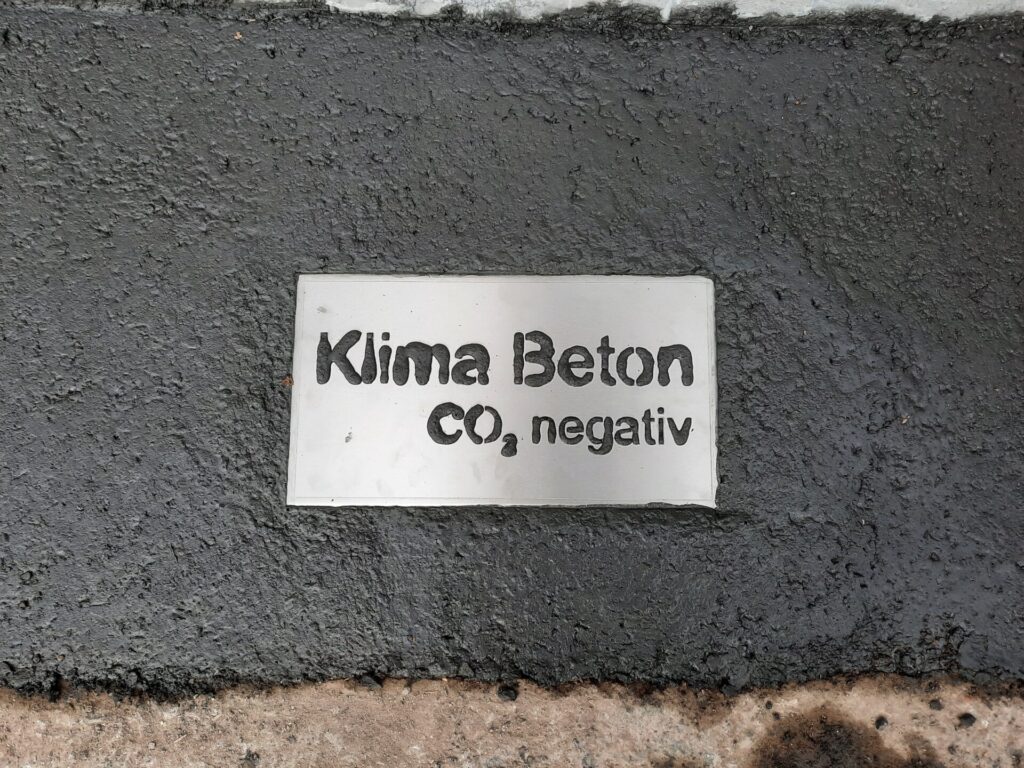
Conventional building materials are responsible for around 11% of global CO₂ emissions. To change this, we need innovative, new building materials - which not only save CO₂ emissions, but also bind CO₂ in the long term. And thus become a CO₂ sink. This is made possible by building materials that contain green carbon, for example. Instead of just climate-neutral construction, these new building materials enable climate-positive construction - simply put, they create buildings that store the CO₂ extracted from the atmosphere in the long term.
The science behind it: Minus-CO₂ meets construction
When Green Carbon is used in durable building materials, the result is Minus-CO₂ - a scientifically recognized negative emission technology. This means that buildings become active CO₂ reservoirs that have a positive impact on the climate over their entire lifespan.

What makes building materials with green carbon so revolutionary?
The green carbon from our reverse power plants has unique properties for the construction industry:
- Permanent CO₂ storage: up to 30% of the CO₂ originally bound in the forest residues remains stored in the building material for centuries
- Improved material properties: Higher strength, better insulation values and optimized durability
- Climate-positive balance: every tonne of Green Carbon in the building material corresponds to a permanent CO₂ sink
Climate clay: the building material of the future is already here
Climate clay is probably the most promising application of green carbon in the construction industry. The addition of up to 3% green carbon results in remarkable improvements:
Our partner CarStorCon Technologies provides a tried-and-tested example with the additive Clim@Add®: the patented optimization of green carbon makes it possible to incorporate it into almost any concrete application. The material is easy to process, can be pumped and existing systems can be used without major adjustments¹.
Technical advantages
The following improvements are based on CarStorCon Clim@Add® technology¹:
- Improved workability: Easy to apply, pumpable and optimized for high outside temperatures.
- Seamless integration: Existing systems and feeding mechanisms can be used without major adjustments.
- Compatibility: Can be easily combined with existing sustainability measures such as recycling solutions.
- Chemical stability: EBC-certified Green Carbon with a permanently stable molecular structure.
Climate protection aspects
- CO₂ storage: 1 kg of Clim@Add® can permanently store up to 3 kg of CO₂¹
- Permanent CO₂ sinks: the green carbon forms a permanent bond with the concrete matrix
- Circular economy: use of forest residues from sustainable forestry and fast-growing roadside greenery¹
Findings from practice
- Processing: Seamless integration into existing construction processes, as confirmed by CarStorCon with Clim@Add®¹
- Optics: Characteristic dark coloring as a design element
- Carbon footprint: measurable CO₂ storage thanks to stable carbon in the concrete matrix

Insulation materials: Insulate and store CO₂ at the same time
Green Carbon and biochar are also revolutionizing thermal insulation. In climate-positive insulating materials, it combines excellent insulating properties with permanent CO₂ binding:
Innovative applications
- Foam insulation: As a filler in PU and other foams
- Fiber insulation: admixture to wood fiber and cellulose insulation
- Blow-in insulation: Improving thermal conductivity and moisture regulation
- Vacuum insulation: Optimized support structures with green carbon
Advantages for construction companies:
- Better U-values: Up to 10% improved insulation performance
- Moisture regulation: Natural climate regulation indoors
- Fire protection: Increased fire resistance due to the carbon structure
- Durability: More stable insulation effect over the entire service life of the building
The versatility of green carbon enables innovative solutions in a wide range of building materials such as paints, coatings, plaster, mortar and much more, in addition to the areas of application mentioned.
The economic efficiency of climate-positive building materials
Contrary to widespread assumptions, building materials with green carbon are already economically attractive today:
Cost factors
- Material costs: around 5-15% surcharge compared to conventional building materials
- Processing costs: No additional costs due to established processes
- Lifetime costs: Reduced maintenance and longer service life
Economic advantages
- CO₂ certificates: revenue possible through BCR certification
- Funding programs: Increasing public support for climate-positive building materials
- Increase in value: properties with sustainable building materials achieve higher sales prices
- ESG compliance: meeting sustainability targets for companies and investors
Standardization and certification: the path to market maturity
The integration of green carbon into building materials is carried out according to strict standards:
Relevant norms and standards:
- DIN EN 206: Adaptations for climate clay with green carbon
- European Biochar Standard (EBC): Quality assurance for biochar in building materials
- DGNB/BREEAM: Assessment systems for sustainable building recognize climate-positive building materials
- BCR certification: proof of permanent CO₂ storage
Quality assurance:
- Material testing: regular inspection of Green Carbon
- Application tests: Long-term tests for durability and stability
- CO₂ balancing: transparent documentation of the climate impact
- Traceability: complete documentation of the supply chain from forest residues to building material

The future of climate-positive construction
A look into the future shows that much is still possible through innovation and research if climate-positive construction or the combination of climate protection and construction measures is prioritized. This would also increase political and social awareness of the potential of green carbon and biochar in building materials.
Trends and developments
- Smart buildings: integration of IoT sensors for CO₂ balance monitoring
- 3D printing: First trials with green carbon-based printing materials
- Modular construction: Prefabricated elements with optimized Green Carbon
- Refurbishment: retrofit solutions for existing buildings
Market forecasts
- Volume: Market share of 15% expected for innovative building materials by 2030
- Prices: Further cost reduction through economies of scale and optimization
- Applications: Expansion to infrastructure construction, civil engineering and special applications
- Regional: Expansion in emerging markets with major construction programs
Conclusion: Building as active climate protection?
Building materials with green carbon are transforming the construction industry from an emitter to an active player in climate protection. Every building becomes a CO₂ sink, every construction site a contribution against climate change. The technology is available, the standards are being established and the first projects are proving that climate-positive construction is feasible.
In addition to renewable energy, SYNCRAFT also produces green carbon, which in turn is the basis for a construction industry that removes more CO₂ from the atmosphere than it emits. With our reverse power plants and the green carbon they produce, we have the means to lay the foundations for a climate-positive future.
Reverse is forward - also in the construction industry. Because the future is climate-positive construction.
Further information:
- Green Carbon and its versatile applications
- The Reversepowerplant: Innovation for climate-positive energy
- SYNCRAFT Reversepowerplants at a glance
Sources and further reading:
¹ CarStorCon Technologies GmbH: Clim@Add® technology. https://carstorcon.technology/technologie/ (as of 2025)
² Lehmann, J. et al. (2021): Biochar carbon removal and storage. Nature Reviews Earth & Environment, 2, 1-13.
Schmidt, H.-P. et al. (2019): European Biochar Certificate - Guidelines for a Sustainable Production of Biochar. Version 10.1. European Biochar Foundation.
⁴ IPCC (2022): Climate Change 2022: Mitigation of Climate Change. Working Group III Contribution to the Sixth Assessment Report.
⁵ Woolf, D. et al. (2010): Sustainable biochar to mitigate global climate change. Nature Communications, 1, 56.
⁶ Joseph, S. et al. (2021): How biochar works, and when it doesn't: A review of mechanisms controlling soil and plant responses to biochar. GCB Bioenergy, 13, 1731-1764.
⁷ Renewable Carbon Initiative (2023): Carbon Utilization in Construction Materials. RCI Policy Paper.
⁸ DGNB System (2023): Criterion ENV1.1 - Life cycle assessment of the building. German Sustainable Building Council.
⁹ European Commission (2023): EU Strategy for Sustainable and Circular Textiles. COM(2022) 141 final.
¹⁰ Building Research Establishment (2022): BREEAM International New Construction Manual. Version 6.0.


January 21, 2026
Top Topics 2026: Will we reach the energy transition point?
New legal frameworks, increasing expansion targets for renewable energies, and growing pressure to defossilize will bring change to the energy sector in 2026. At the same time, it is becoming increasingly clear that the energy transition will not be achieved through individual technologies, but through their interaction. Renewable energies, bioenergy, Green Carbon, decarbonization, defossilization, and smart Minus-CO₂ are converging into a single system. This is precisely where the top topics for our industry in 2026 lie.
read more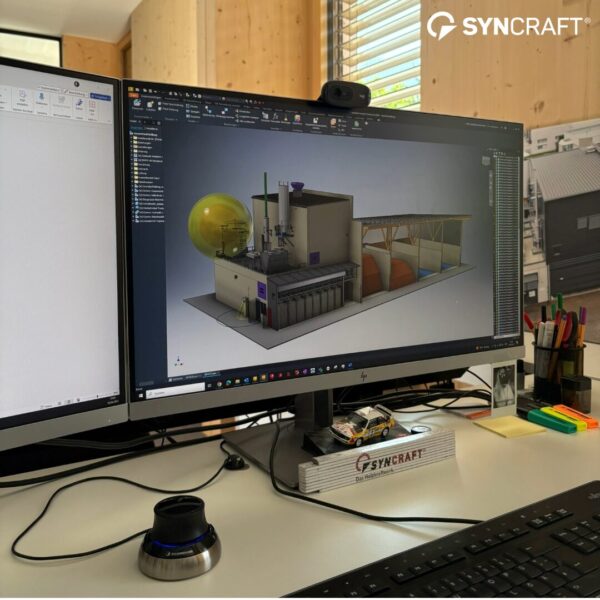
January 2, 2026
Blueprint Wallern: Construction diary phases 1+2
How is a Reversepowerplant actually created? What steps are required from the initial idea to climate-positive energy production in ongoing operation? We provide a clear answer to this question in our new blog series "B(l)aupause." Using the project in Wallern as an example, we take you to the construction site and show you transparently, practically, and step by step how regional forest residues are turned into forest residues modern energy system for electricity, heat, and green carbon. A construction diary about planning, cooperation, and the interaction of many trades—and about how defossilization and decarbonization are being implemented in concrete terms.
read more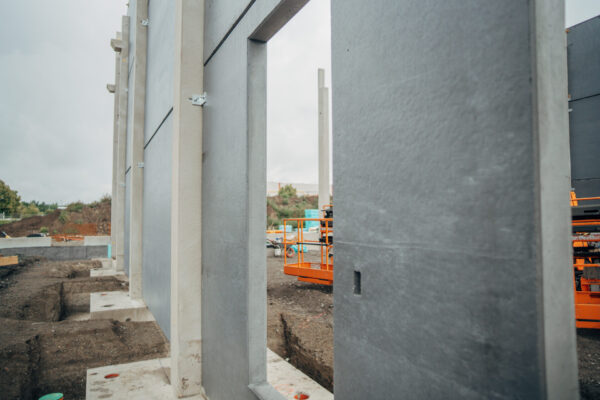
December 15, 2025
Climate-positive precast concrete elements: MARKGRAF x ecoLocked x SYNCRAFT
Climate-positive construction—what does that mean? The pilot project by MARKGRAF and ecoLocked in Kemnath provides a clear answer. The striking dark color pigments in the concrete are not just a design statement—they are visible proof of permanently bound CO₂ and active climate protection. This is made possible by green carbon, which is produced in our reverse power plants. When added to concrete, it creates a permanent CO₂ sink. Specifically, this means that over 10.68 tons of CO₂ have been permanently bound in this project. The black pigments in the concrete highlight the added value of climate protection and send a strong visual signal to the construction industry and a functioning bioeconomy.
read more
September 29, 2025
Green Carbon in metallurgy
Metallurgy is facing a historic transformation: while the steel industry is responsible for 5-7 percent of global greenhouse gas emissions, Green Carbon offers a revolutionary alternative to fossil coals. With its reverse power plants, SYNCRAFT shows how regional forest residues can be turned into sustainable carbon for the defossilization of the metal industry.
read more
August 13, 2025
Certificates for climate protection
From A for application to Z for certification: REACH registration, European Biochar Certificate, C-Sink certificates - confirmed quality against climate change? We were one of the first system manufacturers to be recognized as an "Endorsed System Provider" by Carbon Standards International (CSI) in 2024. But what does this mean in concrete terms, which certifications are important and why are they so essential in our industry?
read more
July 17, 2025
Austria's future of renewable energy
Today, renewable energies are far more than just a vision for tomorrow - in many places they are already the present. But how does Austria compare internationally? Which technologies are driving the energy transition, what are the biggest challenges and how can the energy transition succeed in the long term?
read more