Certificates for climate protection
August 13, 2025
#Energy transition #SYNCRAFTFrom A for application to Z for certification: REACH registration, European Biochar Certificate, C-Sink certificates - confirmed quality against climate change? We were one of the first system manufacturers to be recognized as an "Endorsed System Provider" by Carbon Standards International (CSI) in 2024. But what does this mean in concrete terms, which certifications are important and why are they so essential in our industry?
Why certifications are crucial in the biochar industry
From A for application to Z for certification: REACH registration, European Biochar Certificate, C-Sink certificates - confirmed quality against climate change?
Our SYNCRAFT Reversepowerplants generate renewable energy as well as our valuable green carbon. We have known for a long time just how valuable this green carbon really is, as its properties and longevity make it suitable for a wide range of applications in numerous industries and technologies. However, as with any innovative technology, trust is the be-all and end-all - and trust is created through transparency, quality and, above all, certification. We were one of the first system manufacturers to be recognized as an "Endorsed System Provider" by Carbon Standards International (CSI) in 2024. But what does this mean in concrete terms, which certifications are important and why are they so essential in our industry?
The foundation: REACH registration as a legal basis
Before we get started, it must be said that this blog article only deals with a small section of possible certifications and the processes have been broken down to the essentials in order to provide an insight into this topic. Now let's start with the mandatory program: the REACH regulation. REACH (Registration, Evaluation, Authorization and Restriction of Chemicals) is not a voluntary certification, but a legal obligation for all manufacturers of green carbon in Europe.
Why REACH for green carbon?
From a technical perspective, Green Carbon is thermo-chemically modified biomass and is therefore subject to the European Chemicals Regulation. Regardless of its subsequent use, every producer of green carbon must register it under REACH.
The 5-step process for REACH registration
- Create a REACH-IT account: The central platform for all REACH processes
- Substance identification: EBC analyses are recognized for identification; an XRD analysis is also required
- Request procedure: Official request to ECHA with analytical data
- Letter of access: Conclusion of contract with the first COALSTER registrant
- Registration: Data transmission and receipt of the registration number
This process is considerably simplified for SYNCRAFT customers because, as a system-certified manufacturer, we have already created the technical basis.
Quality assurance: The European Biochar Certificate (EBC)
The European Biochar Certificate (EBC) is the core of the voluntary quality certification for Biochar or our green carbon. Developed by Carbon Standards International, it defines strict quality categories and areas of application.

The EBC quality categories at a glance
- FutterPlus & AgroBio: Highest quality levels for animal feed and agriculture
- Feed & Agro: Standard qualities for agricultural applications
- Urban: Especially for urban applications
- Utility material & raw material: For industrial processing
Why EBC is important for operators
- Market access: Many retailers and processors insist on EBC certification
- Quality assurance: consistently high product quality thanks to standardized testing procedures
- Legal certainty: clear assignment to areas of application
- Competitive advantage: Differentiation in the market through proven quality
CO₂ certification: C-sink and the climate impact
This is where it gets particularly exciting: the C-sink certificate certifies the CO₂ sequestration potential of our green carbon. It is based on an EBC analysis plus detailed information on process emissions.
SYNCRAFT as Endorsed System Provider

As an endorsed system provider of CSI, we have a decisive advantage: the basic parameters of our Reversepowerplants are already stored in the C-Sink system. This means for our customers:
- Simplified certification process: less effort, faster processing
- Prefabricated data sets: Technical parameters are already validated
- Consistent quality: system certification guarantees consistent standards
From certification to the CO₂ certificate
The path to tradable CO₂ certificates leads via specialized platforms such as CarbonFuture:
- Registration with CarbonFuture
- Upload of EBC and C-Sink certificates
- Enter the key data (tonnage, intended use, user confirmation)
- Generation of Carbon Removal Credits
Why certifications are critical to success in our industry

1. credibility in the CO₂ market
The international carbon market is based on trust and measurability. Only certified systems can:
- Confirmation: Prove reliable CO₂ sink performance
- Security: offering investors and partners security
- International: Enabling access to international carbon markets
2. financing basis for projects
Banks and investors are increasingly demanding verifiable climate impact. Certifications are often a prerequisite for:
- Green financing
- Subsidies
- Long-term purchase agreements
3. regulatory protection
The EU is continuously tightening the requirements for sustainable technologies. Certifications offer:
- Legal certainty in the event of changing regulations
- Compliance with ESG criteria
- Protection from greenwashing accusations
4. market differentiation
In a growing market, certifications ensure clear differentiation:
- Quality promise to customers
- Premium positioning on the market
- Protection from inferior competition
Biochar Carbon Removal (BCR): The future of negative emissions
The combination of EBC and C-Sink enables Biochar Carbon Removal (BCR) - the international terminology for CO₂ sequestration using green carbon. In simple terms, this means the removal and permanent storage of carbon dioxide (CO₂) from the atmosphere or industrial emissions. BCR is considered the most important negative emissions technology available - we have already reported on BCR and BECCS here several times. This is because the combination of both core technologies can be found in our reverse power plants.
BECCS: Bioenergy with Carbon Capture and Storage
Our Reversepowerplants also realize BECCS (Bioenergy with Carbon Capture and Storage) - the combination of sustainable energy generation and permanent CO₂ storage. This dual strategy of defossilization and decarbonization makes our technology a key technology in the fight against climate change.
Conclusion: Quality creates the climate turnaround
In the green carbon industry, certifications are not just "nice to have" or a clever marketing move - keyword: greenwashing. They are the foundation for credible climate protection. As a CSI Endorsed System Provider, we at SYNCRAFT already received our quality seal in 2024. For us, this was just the beginning, because even the best quality needs to be regularly reviewed and reconsidered in order to give innovation the space it needs for real change. So we continue to optimize, but what makes us particularly happy? That our customers benefit from the decorative certification: simplified access to their own certifications, confirmed quality and a direct route to CO₂ certificates.
One thing is clear to us: the climate transition will only succeed with transparent, measurable and certified solutions. And above all #together.


January 21, 2026
Top Topics 2026: Will we reach the energy transition point?
New legal frameworks, increasing expansion targets for renewable energies, and growing pressure to defossilize will bring change to the energy sector in 2026. At the same time, it is becoming increasingly clear that the energy transition will not be achieved through individual technologies, but through their interaction. Renewable energies, bioenergy, Green Carbon, decarbonization, defossilization, and smart Minus-CO₂ are converging into a single system. This is precisely where the top topics for our industry in 2026 lie.
read more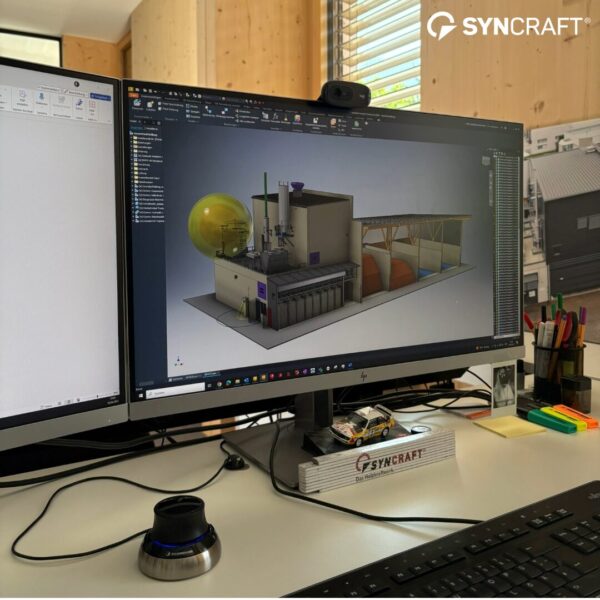
January 2, 2026
Blueprint Wallern: Construction diary phases 1+2
How is a Reversepowerplant actually created? What steps are required from the initial idea to climate-positive energy production in ongoing operation? We provide a clear answer to this question in our new blog series "B(l)aupause." Using the project in Wallern as an example, we take you to the construction site and show you transparently, practically, and step by step how regional forest residues are turned into forest residues modern energy system for electricity, heat, and green carbon. A construction diary about planning, cooperation, and the interaction of many trades—and about how defossilization and decarbonization are being implemented in concrete terms.
read more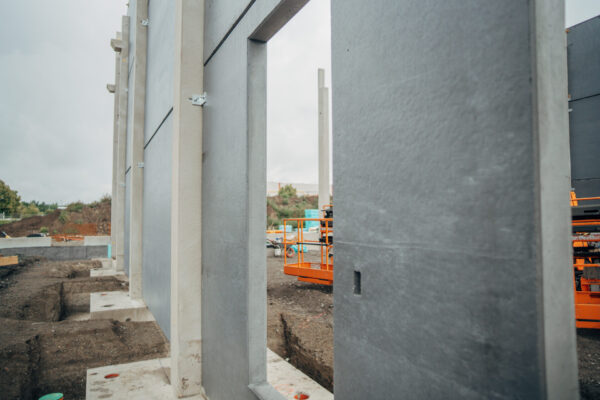
December 15, 2025
Climate-positive precast concrete elements: MARKGRAF x ecoLocked x SYNCRAFT
Climate-positive construction—what does that mean? The pilot project by MARKGRAF and ecoLocked in Kemnath provides a clear answer. The striking dark color pigments in the concrete are not just a design statement—they are visible proof of permanently bound CO₂ and active climate protection. This is made possible by green carbon, which is produced in our reverse power plants. When added to concrete, it creates a permanent CO₂ sink. Specifically, this means that over 10.68 tons of CO₂ have been permanently bound in this project. The black pigments in the concrete highlight the added value of climate protection and send a strong visual signal to the construction industry and a functioning bioeconomy.
read more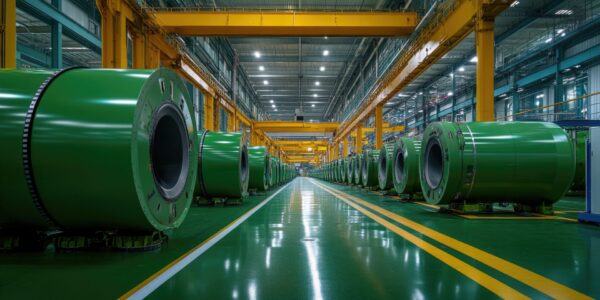
September 29, 2025
Green Carbon in metallurgy
Metallurgy is facing a historic transformation: while the steel industry is responsible for 5-7 percent of global greenhouse gas emissions, Green Carbon offers a revolutionary alternative to fossil coals. With its reverse power plants, SYNCRAFT shows how regional forest residues can be turned into sustainable carbon for the defossilization of the metal industry.
read more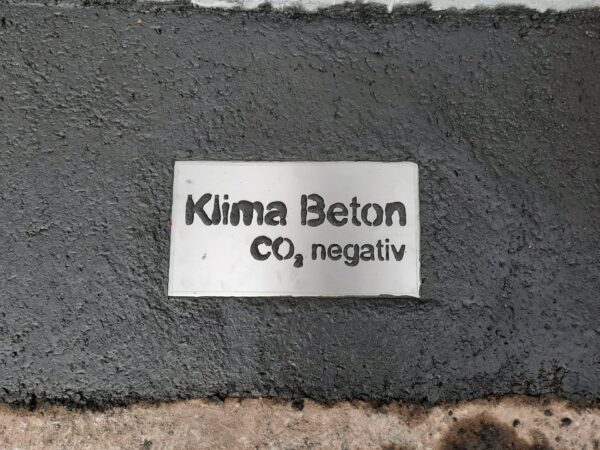
August 21, 2025
Building materials with green carbon: the future of construction
Conventional building materials are responsible for around 11% of global CO₂ emissions. To change this, we need innovative, new building materials - which not only save CO₂ emissions, but also bind CO₂ in the long term. And thus become a CO₂ sink. This is made possible by building materials that contain green carbon, for example.
read more
July 17, 2025
Austria's future of renewable energy
Today, renewable energies are far more than just a vision for tomorrow - in many places they are already the present. But how does Austria compare internationally? Which technologies are driving the energy transition, what are the biggest challenges and how can the energy transition succeed in the long term?
read more