"Green asphalt" in NEUE Vorarlberger Tageszeitung
December 02, 2020
A farm full of energy
NEUE Vorarlberger Tageszeitung | Sunday, October 18, 2020; Vorarlberg p. 32, 33
Tobias Ilg took over the farm from his father 20 years ago. Instead of milk, renewable energy is now produced here. And it is extremely successful.
An oversized black and white photograph in the lounge is a reminder of the famous ancestor: The farm in Dornbirn-Hatlerdorf was once run by Ulrich Ilg, the first governor of Vorarlberg after the Second World War. The picture shows the politician at work in the forest. "My grandfather was someone who didn't talk much. But he got things done," says Tobias Ilg about his grandfather. He himself is also someone who likes to take the reins. When the Dornbirn native took over his parents' business in 2000, he completely turned it around: "My father questioned everything critically, but let me do it. I owe my father the freedom to realign the business." The transition from dairy farm to agricultural energy service provider was not easy for the farm successor, but it was a well-considered step. A new animal welfare law would have required the construction of a new stable building. The location in the middle of a residential area was not suitable for this. The reorientation of the farm also took place at a time when there were no food shortages. "If the local population were dependent on food production, I would certainly use the land differently," emphasizes the master farmer.
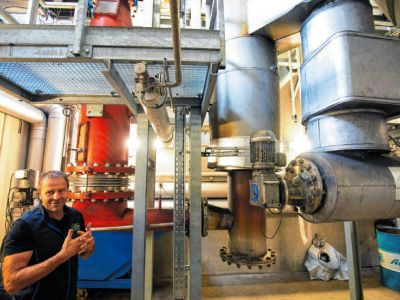
Energy from cattle manure.
The farm has a total agricultural area of 20 hectares. Of this, five hectares are biodiversity areas, which serve to preserve biodiversity. A further five hectares are used for arable farming: Here, spelt for the Martinshof, strawberries for the Winderhof or silage maize are grown in crop rotation. Energy crops are produced on an area of ten hectares, the yields of which are used to feed the biogas plant in Dornbirner Ried.
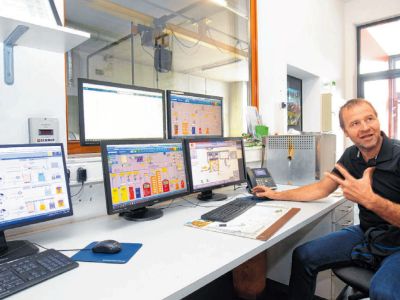
The plant, which supplies around 350 households with green electricity, also utilizes the leftover silage maize and liquid manure from seven surrounding farms. The liquid manure is used to generate energy and then returned to the farmers, who use the fermentation substrate from the biogas plant to fertilize their fields.
"Biogas slurry is significantly higher quality. Fertilizer yields increase. Another advantage is that the slurry smells less," explains Tobias Ilg, who runs EnergieWerk Ilg together with his brother Bernhard. The heat generated during electricity production is used to dry wood chips. This in turn is fed into one of the eight biomass heating plants. Using 25 kilometers of district heating pipes, around 400 properties can be supplied with heat all year round. "Climate change and insulation in new buildings mean that less heating is needed. The demand for electricity, on the other hand, is growing and growing," says Ilg.
Helping to shape the energy transition.
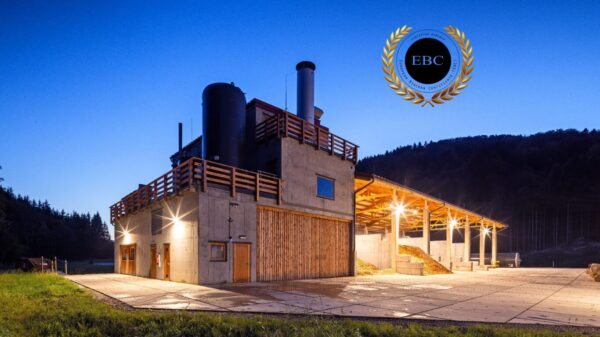
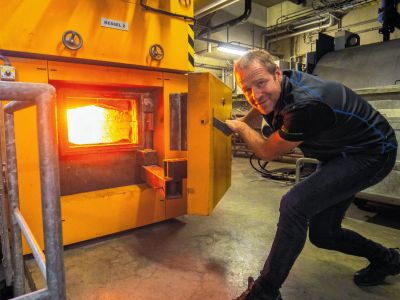
The energy transition can only succeed if more electricity is generated from renewable energies. This is why the Ilg family has invested in the construction of two wood-fired power plants in recent years. Combustible wood gas is produced from wood chips in a plant co-developed by Tobias Ilg. The gas obtained is purified and converted into green electricity in the biomass cogeneration plant, which is fed into the public grid. The two plants generate six million kilowatt hours of electrical energy every year, enough to supply one in ten Dornbirn residents with electricity. The waste heat generated during the process is also fed into EnergieWerk's existing district heating network.
As a valuable third product, the wood-fired power plants supply biochar, which can store CO2 in the long term. "With biochar, agriculture has a trump card up its sleeve. It can actively help to combat climate change," emphasizes the committed energy farmer. The charcoal not only stores CO2, but also builds up humus in the fields. "By using biochar, we have more productive soils that can also withstand climate change," says the 47-year-old. In addition, the use of biochar also has an economic aspect for farmers: they have the opportunity to provide climate services. Both private individuals and companies can buy CO2 certificates via an internet platform.
"The great thing about it is that I can choose which project I want to support with my money. For example, I can specifically choose a farmer from the Bregenzerwald." The biochar is also certified as animal feed. When it is added to animal feed, the odor pollution from manure is reduced many times over. The charcoal is also used as bedding in poultry houses: it binds ammonia, which reduces emissions in the air and makes people and animals feel more comfortable in the house.
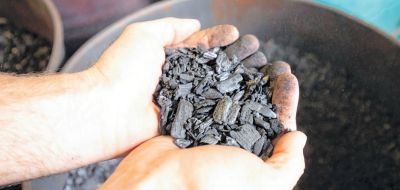
Climate-friendly asphalt.
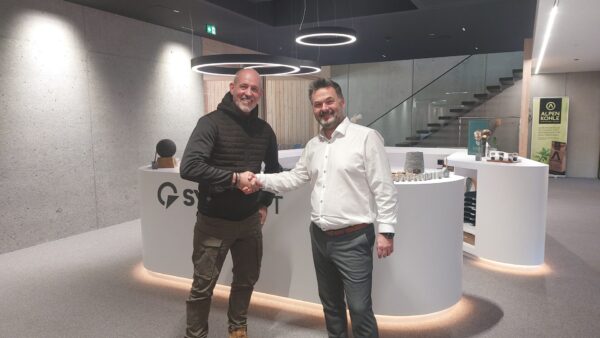
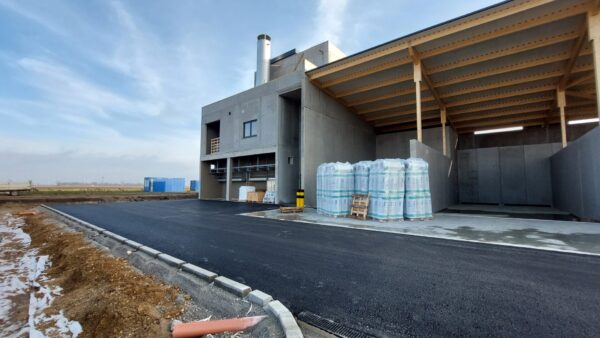
Ilg is particularly proud of his "green asphalt" project: a few days ago, asphalt mixed with biochar was laid for the first time in the world on a test track in Dornbirn. This is intended to bind CO2 in the long term. The Dornbirn-based company wants to show that asphalt can not only be climate-neutral, but also climate-positive. Tobias Ilg has assumed liability for the 50 square meters of test surface himself. "Some say we're pioneers, others say we're crazy," he laughs. "Green asphalt" is a collaboration with the road construction company Migu and the system supplier Syncraft. The Ilg family sees great potential in the use of biochar in road construction, but does not want to make a profit from the idea. "We are just demonstrating what is possible. After that, we'll get out of the asphalt business again," says the entrepreneur. The composition of the new asphalt will be freely available as soon as certification has been completed.
In addition to his varied professional activities, Tobias Ilg is also involved in the volunteer fire department and the Dornbirn hunting committee, is chairman of the Vorarlberg Biomass Association, a member of the Chamber of Agriculture's energy committee and a member of the board of Arge Kompost Biogas. The fact that the Vorarlberg native has extensive knowledge in the field of renewable energies is now also known among politicians. The 2018 Farmer of the Year is often asked for his opinion when it comes to legislative changes. "I've already been able to contribute to one or two pieces of legislation at federal level," he says proudly. To recharge his batteries, the father of two daughters likes to go into the forest. Even his grandfather Ulrich knew that this was the best place to gather strength.
Photos: NEUE Vorarlberger Tageszeitung