The forest, the forest residues and the climate.
April 17, 2025
#Energy transition #Climate positiveThe forest must be an all-rounder - today and even more so in the future: it provides the renewable raw material wood, stores CO2, ensures biodiversity, protects settlements from natural hazards and is an important recreational area and workplace. Our Reversepowerplants use forest residues in the form of forest chips for sustainable energy generation and the production of valuable green carbon. But what does sustainable forest management have to do with it? Why is the regular cycle of harvesting and replanting trees so important for our environment and energy production? And what do we actually mean by sustainable forest management?
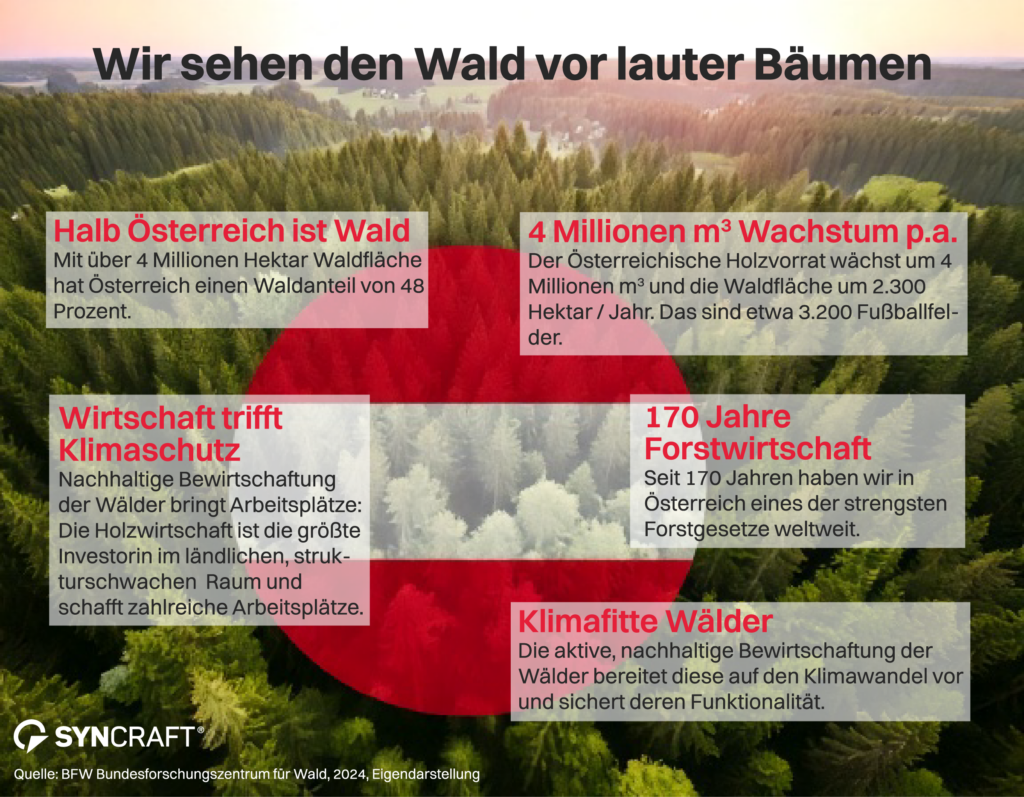
Forest: The all-rounder in (climate) change
The forest must be an all-rounder - today and even more so in the future: it provides the renewable raw material wood, storesCO2, ensures biodiversity, protects settlements from natural hazards and is an important recreational area and workplace. Here in Austria in particular, the potential of forests is huge when you consider that, at 48 percent, forests cover around half of Austria's surface area. But just because something is obviously there doesn't mean that we deal with it sufficiently. Can we still see the wood for the trees? With all its needs and opportunities? And what does the forest have to do with our reverse power plants?
Forest as a climate protector and energy source
The forest is not only a place of recreation and home to numerous animal and plant species, but also plays a crucial role in the fight against climate change. However, as trees can grow very old, forests are slow to adapt to climate change. The forestry industry is therefore looking for ways to manage forests so that we can still use them in the next century. And because trees also absorb the most carbon dioxide (CO2) from the air through their leaves during the growth phase, forest management is becoming increasingly important.
Conversely, this means that regular harvesting and replanting is part of climate protection and climate change. And what does this have to do with us and our reverse power plants? Quite simply: the harvesting process always produces residues - and we use these forest residues in the SYNCFAFT reverse power plants to produce resource-saving electricity, heat, Green Gas and green carbon.
The CO₂ cycle in the forest: young trees as efficient climate protectors
A common misconception is that old forests are the largest CO₂ reservoirs and should therefore remain untouched. In fact, the situation is more complex:
💡Young, growing trees absorb significantly more CO₂ than old trees. During the growth phase - around the first 20-40 years of their life - trees store carbon particularly intensively, as this is when they grow fastest and build up biomass.
This can be illustrated with a simple picture:
- A young tree is in its "growth phase" and needs large amounts of carbon, which it absorbs from the atmosphere in the form of CO₂
- With increasing age, this growth slows down, and with it the absorption of CO₂
- An old tree stores more carbon than a young one, but absorbs comparatively less new CO₂
Regular harvesting and replanting:
Sustainable forestry utilizes this natural process by:
- Harvesting mature trees: Trees are harvested before they enter the slow growth phase
- Planting new trees: these young trees actively absorb CO₂ from the atmosphere
- The harvested wood is used in the long term: Long-term use means that the stored carbon remains sequestered
This principle of sustainability was introduced in forestry over 300 years ago - never taking more wood than can grow back. Today, we know that this practice not only secures the supply of wood, but also actively protects the climate - a principle to which SYNCRAFT has been committed since its foundation.
"Forests are effective climate protectors, but at the same time they also suffer from climate change. Forest Day is a good opportunity to draw attention to the fact that sustainable forest management is indispensable in two respects: on the one hand, it increases the climate protection effect of forests because it makes wood available that, when used as a material and building material, extends the carbon reservoir from the forest and replacesCO2-generating materials. On the other hand, sustainable management and active forestry are needed right now to help forests adapt to climate change."
Richard Stralz, Chairman of proHolz Austria, the Austrian forestry and timber industry association
💡Important fact: The global annual wood harvest is around 3.9 billion cubic meters, or around 2 gigatons - which is similar to the amount of steel consumed worldwide! This enormous quantity underlines the importance of wood as a sustainable raw material.
forest residues: the driving force behind Reversepowerplants
As already mentioned, wood harvesting inevitably produces residues. In the past, some of this forest residues was left in the forest, where it rotted and released the stored CO₂. And this is where our Reversepowerplants come into play: they use the forest residues in the form of wood chips to generate renewable energy and produce green carbon.
Our woodchippings are not to be confused with white woodchippings, which are already widely used and reused. Our wood chips are unprocessed and are used as fuel in the Reversepowerplant together with bark and small impurities. The impurities are filtered and separated in the Reversepowerplant so that only the useful residual wood remains.

forest residues in the form of wood chips
The patented SYNCRAFT technology makes it possible to use precisely this material in the form of forest chips as an efficient fuel in our reverse power plants.
Principles of sustainable forest management
Our Reversepowerplants use forest residues in the form of forest chips as a valuable resource. But where does this material come from? For us, responsible forest management is a central component of our climate-positive philosophy. Only if forests are managed sustainably can they fulfill their important role as a CO₂ reservoir and source of renewable resources in the long term - the principles of sustainable forest management include
- 🌳 Selective harvesting
Not all trees are felled at the same time - instead, mature trees are selectively removed to keep the forest ecosystem stable.
- 🌱 Immediate reforestation
Immediately after the timber harvest, new trees are planted to maintain the natural forest cycle.
- 🌿 Promoting biodiversity
Instead of monocultures, we focus on species-rich mixed forests - for more biodiversity, ecological resilience and healthy forests.
- 🛡️ Soil protection
Gentle harvesting methods prevent soil erosion and preserve the structure and fertility of the forest soil.
- 📜 Certified forest management
Compliance with recognized standards such as FSC or PEFC, which ensure ecological, economic and social criteria.
A sustainable (reverse) cycle for the future
SYNCRAFT Reversepowerplants are specially designed to make the most efficient use of forest residues - a perfect link between sustainable forestry and climate-neutral energy generation.
The sustainable use of our forests in conjunction with the reverse power plants is a perfect example of a functioning circular economy. By regularly harvesting trees in their optimal growth phase and consistently reforesting them, we create a continuous cycle of CO₂ sequestration. At the same time, we obtain a renewable raw material and energy source.

Wood chips in front of a Reversepowerplant



January 21, 2026
Top Topics 2026: Will we reach the energy transition point?
New legal frameworks, increasing expansion targets for renewable energies, and growing pressure to defossilize will bring change to the energy sector in 2026. At the same time, it is becoming increasingly clear that the energy transition will not be achieved through individual technologies, but through their interaction. Renewable energies, bioenergy, Green Carbon, decarbonization, defossilization, and smart Minus-CO₂ are converging into a single system. This is precisely where the top topics for our industry in 2026 lie.
read more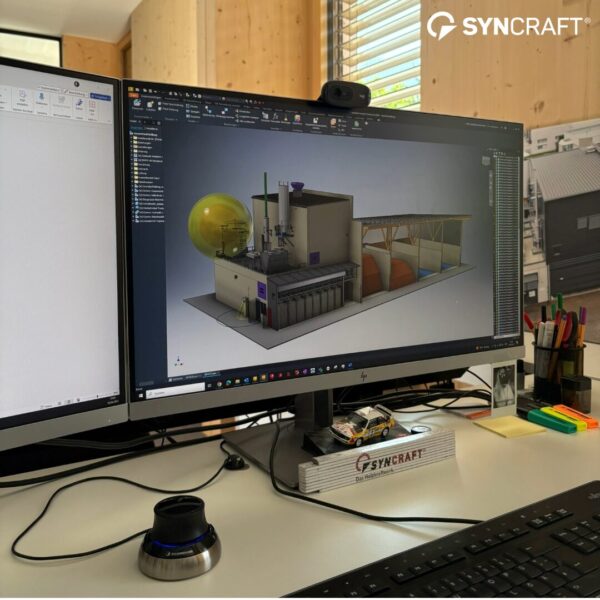
January 2, 2026
Blueprint Wallern: Construction diary phases 1+2
How is a Reversepowerplant actually created? What steps are required from the initial idea to climate-positive energy production in ongoing operation? We provide a clear answer to this question in our new blog series "B(l)aupause." Using the project in Wallern as an example, we take you to the construction site and show you transparently, practically, and step by step how regional forest residues are turned into forest residues modern energy system for electricity, heat, and green carbon. A construction diary about planning, cooperation, and the interaction of many trades—and about how defossilization and decarbonization are being implemented in concrete terms.
read more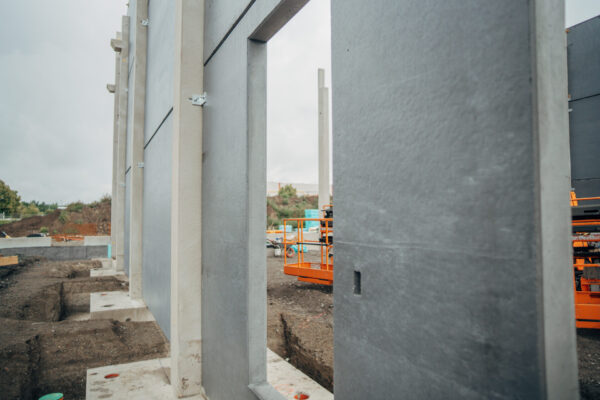
December 15, 2025
Climate-positive precast concrete elements: MARKGRAF x ecoLocked x SYNCRAFT
Climate-positive construction—what does that mean? The pilot project by MARKGRAF and ecoLocked in Kemnath provides a clear answer. The striking dark color pigments in the concrete are not just a design statement—they are visible proof of permanently bound CO₂ and active climate protection. This is made possible by green carbon, which is produced in our reverse power plants. When added to concrete, it creates a permanent CO₂ sink. Specifically, this means that over 10.68 tons of CO₂ have been permanently bound in this project. The black pigments in the concrete highlight the added value of climate protection and send a strong visual signal to the construction industry and a functioning bioeconomy.
read more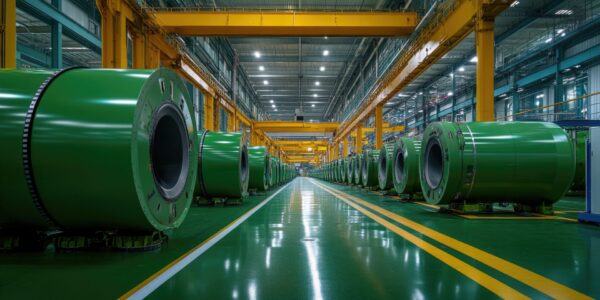
September 29, 2025
Green Carbon in metallurgy
Metallurgy is facing a historic transformation: while the steel industry is responsible for 5-7 percent of global greenhouse gas emissions, Green Carbon offers a revolutionary alternative to fossil coals. With its reverse power plants, SYNCRAFT shows how regional forest residues can be turned into sustainable carbon for the defossilization of the metal industry.
read more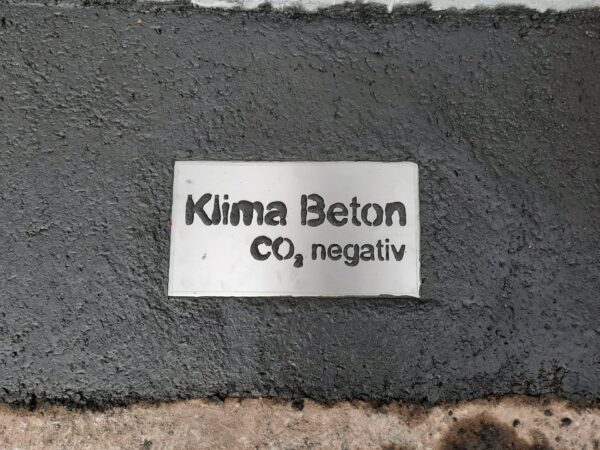
August 21, 2025
Building materials with green carbon: the future of construction
Conventional building materials are responsible for around 11% of global CO₂ emissions. To change this, we need innovative, new building materials - which not only save CO₂ emissions, but also bind CO₂ in the long term. And thus become a CO₂ sink. This is made possible by building materials that contain green carbon, for example.
read more
August 13, 2025
Certificates for climate protection
From A for application to Z for certification: REACH registration, European Biochar Certificate, C-Sink certificates - confirmed quality against climate change? We were one of the first system manufacturers to be recognized as an "Endorsed System Provider" by Carbon Standards International (CSI) in 2024. But what does this mean in concrete terms, which certifications are important and why are they so essential in our industry?
read more