The Reversepowerplant
April 15, 2025
#Energy transition #Climate positive #SYNCRAFTAt SYNCRAFT, we develop and produce innovative Reversepowerplants that herald a new era of sustainable energy generation. As a leading Austrian GreenTech company from Tyrol, we have perfected a technology that converts forest residues in the form of forest chips into multiple benefits while conserving resources: Electricity, heat, Green Gas and green carbon.
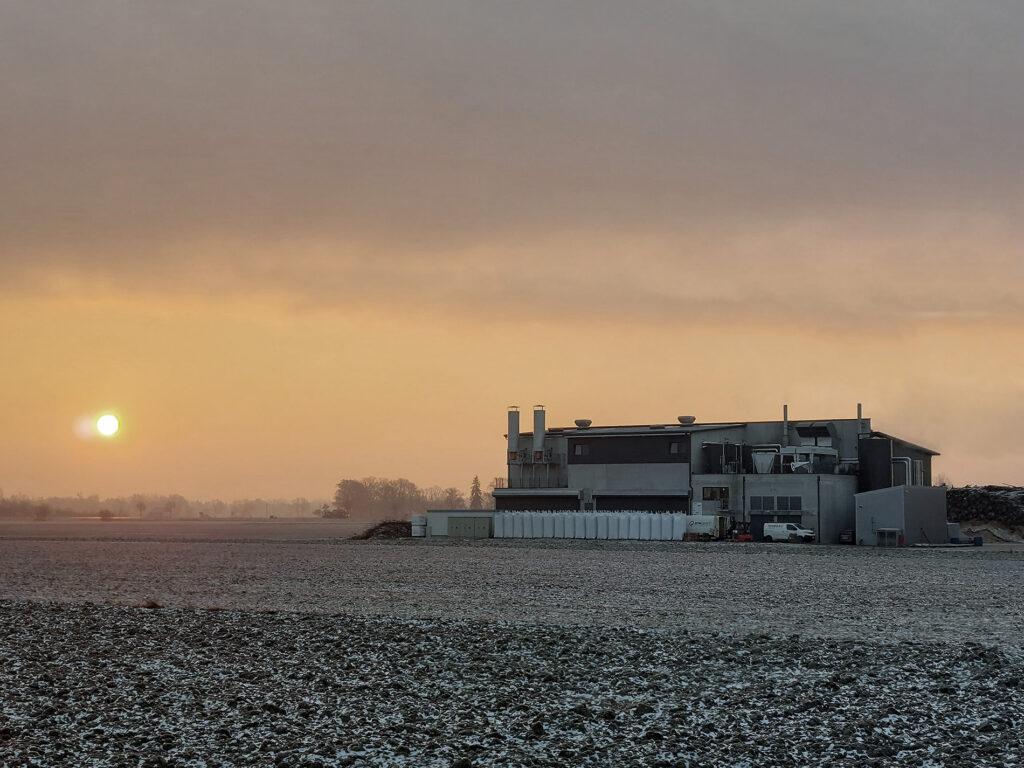
The future of climate-positive energy generation
Innovative Reversepowerplants from Tyrol
At SYNCRAFT, we develop and produce innovative Reversepowerplants that herald a new era of sustainable energy generation. As a leading Austrian GreenTech company from Tyrol, we have perfected a technology that converts forest residues in the form of forest chips into multiple benefits while conserving resources: Electricity, heat, Green Gas and green carbon.
Climate-positive instead of climate-neutral: Minus-CO₂
What makes our technology truly revolutionary is that our plants actively remove CO₂ from the atmosphere by producing green carbon. This dual strategy of defossilization and decarbonization is our contribution to actively counteracting climate change: our Reversepowerplants are not "just" climate-neutral - they are climate-positive.
Since our foundation in 2009, we have established ourselves as a leading provider of Minus-CO₂ in combination with sustainable energy generation. Our Reversepowerplants embody our "Reverse is forward" philosophy in every respect - they not only avoid CO₂ emissions during energy generation, but also go a decisive step further.
Our core competencies:
- Renewable energy from a renewable resource
- Green Carbon as a valuable additional product
- Climate-positive technology: Minus-CO2
- Contribution to sustainable defossilization & decarbonization
Value chain with multiple benefits
The green carbon obtained can replace fossil carbon in various applications - for example in steel production - and thus contribute to defossilization. If the green carbon is reused in such a way that the stored CO₂ remains bound in the long term - for example in building materials such as climate concrete - we speak of climate-positive and can thus contribute to decarbonization.
✔️ The result: Reversepowerplants turn negative CO₂ into a new value chain - and energy into the future.
Why backwards and not simply power station?
A conventional coal-fired power plant generates energy by burning fossil coal. This produces highCO2 emissions, which pollute our environment and accelerate climate change.
A Reversepowerplant does exactly the opposite: instead of burning coal, it generates green carbon during energy generation and thus bindsCO2 in the long term.
The name Reversepowerplant
What is so special about innovations? They are nameless. Because if they already had a name, they wouldn't be an innovation. That was the starting point. Ultimately, the name came from the end product: green carbon. Because what coal-fired power plants burn in fossil form to generate energy, our Reversepowerplants produce as an additional product during the energy generation process.
By generating green carbon, we also actively remove and storeCO2 from the atmosphere. In this way, Reversepowerplants generate both clean energy and negative CO2, enabling us to play an active role in climate protection.
💡Important fact: Negative emissions technologies are a key component of the global climate protection strategy.
How a Reversepowerplant works

Wood chips (left) become green carbon (right).
Our Reversepowerplants use forest residues in the form of wood chips from sustainable forestry, which, if left unused in the forest, would releaseCO2 as it decomposes. Reversepowerplants then generate heat, electricity, Green Gas and green carbon from the forest residues .
This process takes place in several steps:
- Sustainable fuel forest residues
The renewable raw material wood is used as fuel. As it is forest residues in the form of forest chips, no additional trees are felled to generate energy. - Thermochemical gasification
In a special process, the forest residues are heated in a low-oxygen environment. This produces Green Gas, which can either be extracted directly using the hybrid function or reused in the Reversepowerplant to generate electricity and heat. - Production of green carbon
As a valuable additional end product, Green Carbon is produced during energy generation, which stores around 30% of theCO2 originally contained in the wood. Instead of releasingCO2 into the atmosphere as in conventional combustion processes, we bind it permanently in green carbon.
Summarized and compared: Coal-fired power plant vs. Reversepowerplant

All-rounder end product: Green Carbon
The green carbon produced can be used sustainably - because its composition is comparable to anthracite and is therefore of extremely high quality for a wide range of applications. Here is a brief list - more on this in the next blog article on the topic Green Carbon.
- 🌱 1. agriculture & horticulture
- 🐄 2. animal husbandry, feed additives & stable hygiene
- 🏗️ 3. Construction & materials as a substitute for fossil carbon
- 🔬 4th industry & metallurgy forfossil-free production
- 🌊 5. water & wastewater treatment - filter material & pollutant binding
- 🏙️ 6. Urban greenery & climate adaptation: use in roof gardens, tree planting, urban farming
Reversepowerplants and climate protection
To achieve the global climate targets, it is not enough to reduce emissions - we need to actively removeCO2 from the atmosphere. This is exactly where our Reversepowerplants come in:

- CO2 storage instead ofCO2 emissions: Instead of burning fossil fuels and releasing CO2, the carbon is stored in a stable form that is not released back into the atmosphere.
- Use of regional and sustainable resources: We rely on forest residues from sustainable forestry - a renewable raw material from sensible forest management.
- Contribution to the energy transition: The renewable energy generated can replace fossil fuels in many areas and contributes to defossilization.
- Scalability and economic opportunities: The technology is viable both from a climate protection perspective and economically - because in addition to energy, Green Carbon also represents an additional source of income.
Reverse is forward: The future of sustainable energy production starts now
Our Reversepowerplants show that it is possible to generate renewable energy and removeCO2 from the atmosphere at the same time. Our motto #BacktoForward stands for precisely this approach of actively promoting climate protection through innovative technologies.
Reversepowerplants are more than just an alternative energy source - they go one step ahead by going backwards. With the combination of sustainable energy generation andCO2 storage, Reversepowerplants offer one of the most promising solutions for a climate-positive future.


January 21, 2026
Top Topics 2026: Will we reach the energy transition point?
New legal frameworks, increasing expansion targets for renewable energies, and growing pressure to defossilize will bring change to the energy sector in 2026. At the same time, it is becoming increasingly clear that the energy transition will not be achieved through individual technologies, but through their interaction. Renewable energies, bioenergy, Green Carbon, decarbonization, defossilization, and smart Minus-CO₂ are converging into a single system. This is precisely where the top topics for our industry in 2026 lie.
read more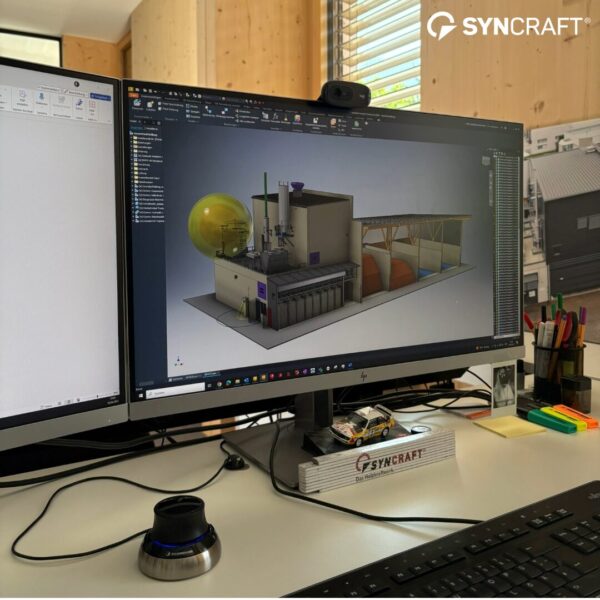
January 2, 2026
Blueprint Wallern: Construction diary phases 1+2
How is a Reversepowerplant actually created? What steps are required from the initial idea to climate-positive energy production in ongoing operation? We provide a clear answer to this question in our new blog series "B(l)aupause." Using the project in Wallern as an example, we take you to the construction site and show you transparently, practically, and step by step how regional forest residues are turned into forest residues modern energy system for electricity, heat, and green carbon. A construction diary about planning, cooperation, and the interaction of many trades—and about how defossilization and decarbonization are being implemented in concrete terms.
read more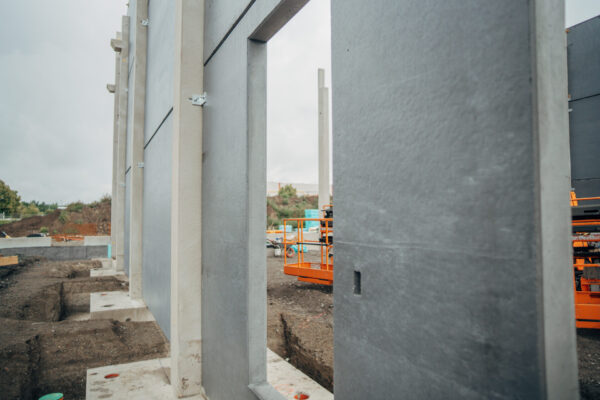
December 15, 2025
Climate-positive precast concrete elements: MARKGRAF x ecoLocked x SYNCRAFT
Climate-positive construction—what does that mean? The pilot project by MARKGRAF and ecoLocked in Kemnath provides a clear answer. The striking dark color pigments in the concrete are not just a design statement—they are visible proof of permanently bound CO₂ and active climate protection. This is made possible by green carbon, which is produced in our reverse power plants. When added to concrete, it creates a permanent CO₂ sink. Specifically, this means that over 10.68 tons of CO₂ have been permanently bound in this project. The black pigments in the concrete highlight the added value of climate protection and send a strong visual signal to the construction industry and a functioning bioeconomy.
read more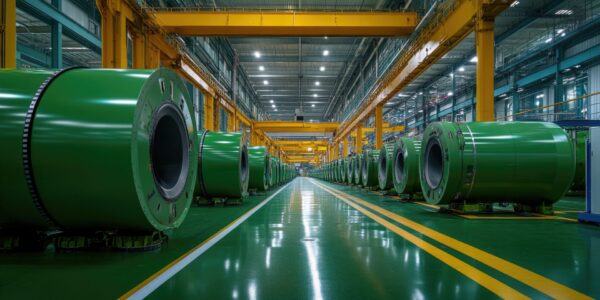
September 29, 2025
Green Carbon in metallurgy
Metallurgy is facing a historic transformation: while the steel industry is responsible for 5-7 percent of global greenhouse gas emissions, Green Carbon offers a revolutionary alternative to fossil coals. With its reverse power plants, SYNCRAFT shows how regional forest residues can be turned into sustainable carbon for the defossilization of the metal industry.
read more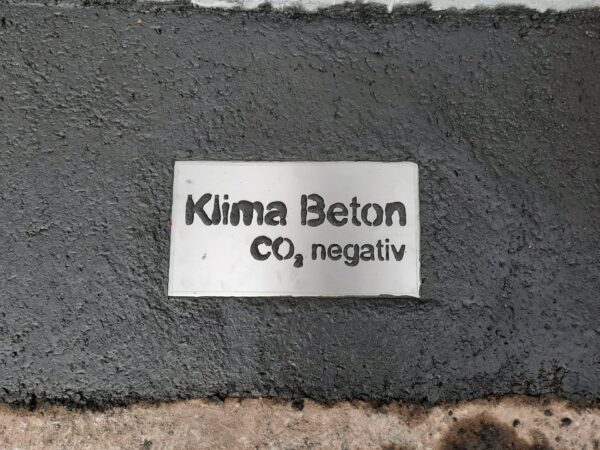
August 21, 2025
Building materials with green carbon: the future of construction
Conventional building materials are responsible for around 11% of global CO₂ emissions. To change this, we need innovative, new building materials - which not only save CO₂ emissions, but also bind CO₂ in the long term. And thus become a CO₂ sink. This is made possible by building materials that contain green carbon, for example.
read more
August 13, 2025
Certificates for climate protection
From A for application to Z for certification: REACH registration, European Biochar Certificate, C-Sink certificates - confirmed quality against climate change? We were one of the first system manufacturers to be recognized as an "Endorsed System Provider" by Carbon Standards International (CSI) in 2024. But what does this mean in concrete terms, which certifications are important and why are they so essential in our industry?
read more