More customer stories
ST. ANDRÄ / AT
St. Andrä: Year-Round Climate Control for Sustainable Vegetable Farming
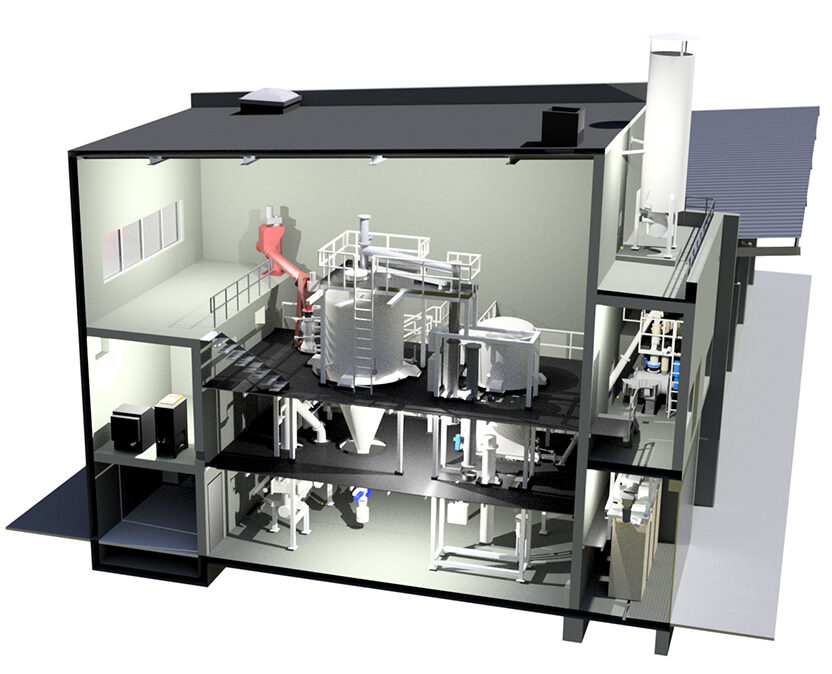
With the establishment of Bio Gemüsewelt Seewinkel GmbH, a modern production facility for organic vegetable cultivation was created in St. Andrä, designed for sustainable resource use and high energy efficiency. The SYNCRAFT Reversepowerplant was integrated into the existing energy concept as a central component. Together with the existing biomass heating system and a large-capacity rainwater storage tank, this creates a largely self-sufficient facility that provides climate-friendly energy for the production of regional organic vegetables.
Challenge & Solution
The challenge was to optimally integrate the SYNCRAFT Reversepowerplant into the existing heating and storage infrastructure. Through its intelligent integration into the existing biomass heating system—including the buffer storage tank—a stable year-round energy supply was established. The heat generated is used directly on-site and provides heating for the 3.2-hectare greenhouse in the winter. In the summer, it serves as an energy source for an absorption chiller, which efficiently cools the greenhouse.
- ClientBio Gemüsewelt Seewinkel GmbH
- System Type CW1800-500
- Electrical power500 kW
- CO₂ avoided3,500 metric tons of CO₂
- CO₂ extracted1,500 metric tons of CO₂
- Heat UtilizationDirectly on Site
- Fuel requirement362 kg/h
- : Scheduled to openin 2026
- 1) compared to natural gas
- 2) permanently removed via green carbon
Innovative Approach & Added Value for the Customer
What makes this project unique is the threefold value creation from a single process: The SYNCRAFT Reversepowerplant generates renewable electricity, usable heat, and valuable green carbon in the form of biochar. Through the seasonal dual use of heat, the 3.2-hectare organic greenhouse is efficiently climate-controlled year-round: for heating in winter and for cooling in summer via an absorption chiller. The operator benefits from year-round, demand-driven use of heat and cooling directly on-site. The electricity generated is fed into the public grid, creating an additional source of income. At the same time, the production of biochar increases the value added by the entire system and sequesters carbon over the long term. Together with the existing energy system and the rainwater storage tank, this creates a resource-efficient overall concept for sustainable vegetable cultivation.


Do you have any questions?
Your contact person will be happy to help you.

Ines Juvan-Beaulieu