Green Carbon: the climate-positive all-rounder
April 30, 2025
#Climate positive #SYNCRAFTThe green carbon produced in the reverse power plants combines remarkable properties with active climate protection. Green carbon binds CO₂ in the long term and achieves a genuine Minus-CO₂. Its versatile applications in six key areas - from agriculture and construction to water purification - make it an indispensable component of defossilization.
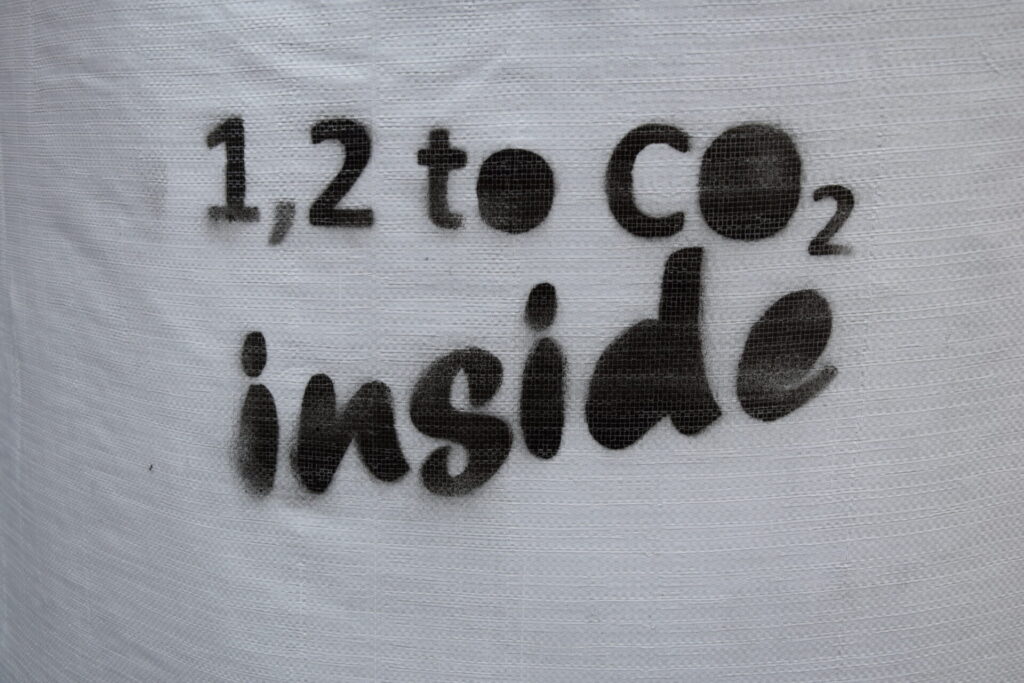
At a time when climate protection and sustainability are not just buzzwords, but necessities, we all face the challenge of finding innovative solutions that go beyond mere CO₂ reduction. This is exactly where we come in, with our Reversepowerplants not only making a climate-neutral contribution, but also a climate-positive one. How does that work? You can find out that and more in the following blog article.
What is Green Carbon?
A central component of the Reversepowerplant innovation is green carbon - a raw material that not only replaces fossil materials, but also actively binds CO₂. And since this short answer probably raises more questions than it clarifies, let's dive deeper into the world of green carbon. We show how the inconspicuous black material is making a decisive contribution to the climate-positive energy transition - and why it is already revolutionizing the way we think about resources, energy and climate protection in a wide range of applications.
Green Carbon:
The climate-positive all-rounder from reverse power plants
Our Reversepowerplants not only generate renewable energy and Green Gas, but also valuable green carbon as a further end product - a versatile raw material with impressive properties.
💡SYNCRAFT fact: The name Reversepowerplant even comes from green carbon - but we discussed exactly how this is connected in the blog article "The Reversepowerplant".
But now back to the question: what is Green Carbon and why does it play such a crucial role in a sustainable future?

From forest residues to minus CO₂
The starting point for our green carbon is forest residues. This valuable resource contains carbon that trees have absorbed from the atmosphere as they grow. In a natural decomposition process, this CO₂ would be released again.
Instead, Reversepowerplants convert the forest residues into five valuable products:
- Electricity
- Heat
- Green Gas
- Green carbon
- Minus-CO2
The special feature: The carbon bound in green carbon remains stable and is not released as CO₂. In this way, we actively remove CO₂ from the atmosphere and generate negative CO₂- the basis for our climate-positive technology.

The properties of green carbon
Der wahre Wert des Grünen Kohlenstoffs zeigt sich besonders deutlich im direkten Vergleich mit fossilen Kohlenstoffträgern. Wie die Vergleichstabelle verdeutlicht, vereint Grüner Kohlenstoff aus SYNCRAFT Rückwärtskraftwerken die besten Eigenschaften verschiedener Kohlenstoffformen: Mit einem hohen Grad der Inkohlung ähnelt er dem hochwertigen Anthrazit, während sein Kohlenstoffanteil von über 90% (wasser- und aschefrei) eine hervorragende Basis für industrielle Anwendungen bietet. Mit einem Wassergehalt von nur 0-25% und sehr geringen flüchtigen Bestandteilen (<12%) übertrifft er deutlich fossile Braunkohle und Holzkohle. Sein maximaler Heizwert von 35 MJ/kg entspricht dem des Anthrazits – jedoch ohne dessen negative Umweltbilanz.
The key difference: while fossil carbons release CO₂ that has been stored in the earth for millions of years into the atmosphere when they are used, the carbon in green carbon comes from the current CO₂ cycle and can be removed from the atmosphere in the long term thanks to its stable structure. This unique combination of high quality and climate-positive effect makes green carbon an invaluable raw material for the sustainable transformation of a wide range of economic sectors.

Climate-positive: (no) science for you
Green Carbon has a stable molecular structure that is similar to the carbon in fossil anthracite, but without its negative environmental impact. This stability enables long-term CO₂ binding, which can last several hundred to a thousand years, depending on the area of application.
By producing green carbon, we are talking about BCR (Biochar Carbon Removal) - a recognized method for negative emissions. If the green carbon (biochar) is reused in such a way that the carbon remains permanently stored in its stable form - for example in building materials - it becomes aCO2 sink. But more on this in the next section, when we look at the applications of green carbon.
In combination with the generation of renewable energy from forest residues , we are also implementing BECCS (Bioenergy with Carbon Capture and Storage). In this way, we are combining two key technologies in the fight against climate change with our reverse power plants.
These scientifically sound processes make our Reversepowerplants one of the few technologies that are not only climate-neutral, but actually climate-positive.
How can green carbon be used economically?
Apart from the fact that it is a great way to storeCO2 in the long term, are there any companies, industries or individuals that use green carbon? As a private individual, you don't hear much about the use of green carbon. That's why we have compiled a list of the various areas of application and possible uses.
Versatile areas of application, great potential
The versatility of green carbon makes it a true all-rounder - also in the defossilization of various industries. Here is a detailed look at the most important areas of application:
- 🌱 Agriculture & Horticulture
Applied to the soil, Green Carbon sustainably improves soil fertility through:
- Optimized soil structure with better water retention
- Increased nutrient availability for plants
- Promotion of healthy soil life
- Permanent CO₂ storage in the soil

💡Goodto know: studies show that the use of green carbon can increase crop yields by up to 25% while binding CO₂ in the long term - a win-win situation for agriculture and the climate.
- 🐄 Animal husbandry & feed
Green Carbon also offers many advantages in animal husbandry:
- As a feed additive, it binds harmful substances in the digestive tract
- In stables, it reduces ammonia emissions and improves the indoor climate
- It reduces climate-damaging methane emissions during liquid manure treatment
- As a bedding additive, it improves hygiene and animal welfare
These applications contribute to more sustainable animal husbandry, which benefits both the environment and the animals.
- 🏗️ Construction & Materials
Green Carbon unfolds its full potential for defossilization in the construction sector:
- As an additive in climate-controlled clay, it improves the material properties
- In insulating materials, it increases the insulating effect
- As an additive in paints and plasters, it ensures a better indoor climate
- It replaces fossil raw materials in asphalt and other building materials
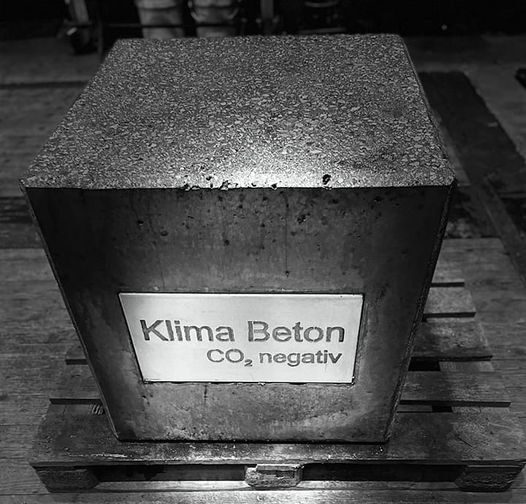
As these applications sequester carbon for decades or longer, they make a significant contribution to the BCR concept and long-term CO₂ storage.
- 🔬 Industry & Metallurgy
Green Carbon can increasingly replace fossil carbon sources in industrial processes:
- In steel production as a substitute for fossil reducing agents
- In silicon production for the solar industry
- As a sustainable carbon carrier in foundries
- As a filler in the production of plastics
This substitution of fossil raw materials is a core element of industrial defossilization and an important step towards climate-neutral production.
- 🌊 Water & wastewater treatment
The excellent filter properties make green carbon valuable for:
- The removal of pollutants from drinking water and wastewater
- The binding of heavy metals and organic compounds
- The improvement of biological cleaning processes
- Sustainable, resource-saving filter systems
With its large inner surface area, Green Carbon often outperforms conventional filter materials and at the same time offers an environmentally friendly alternative.
- 🏙️ Urban greenery & climate adaptation
In urban areas, Green Carbon can support sustainable urban development:
- In tree substrates, it promotes vital growth even under difficult conditions
- On roof gardens, it improves water storage and reduces the need for irrigation
- In urban farming, it increases yields and nutrient content
- In rainwater management, it improves the filter performance
These applications help cities to adapt to climate change and improve the quality of life at the same time.

Green Carbon as a CO₂ certificate generator
Another important aspect is that if Green Carbon is used in such a way that the sequestered carbon is permanently removed from the atmosphere, CO₂ certificates can be generated. This technological solution, known as BCR (Biochar Carbon Removal), is an important negative emissions technology that actively counteracts climate change.

The process is easy to understand:
- Trees remove CO₂ from the atmosphere as they grow
- forest residues are processed in the reverse power plants
- Part of the carbon is permanently bound in the green carbon
- This bonded carbon is used in long-life applications
- The result: a negative CO₂ effect, which is described as climate-positive
The basis for this: Sustainable forest management
Reverse is forward: The renewable resource we use for our green carbon is forest residues from sustainable forest management. You can find out more about this in the blog article "The forest, forest residues and the climate".
Sum-Up, short and sweet: Green Carbon
The green carbon produced in the reverse power plants combines remarkable properties with active climate protection. The green carbon obtained from forest residues binds CO₂ in the long term and achieves a genuine negative CO₂ effect. Its versatile applications make it an indispensable component of defossilization. With technical properties that are equal to or superior to fossil carbons - this unique combination underlines our vision: Reverse is forward with innovative technology .


January 21, 2026
Top Topics 2026: Will we reach the energy transition point?
New legal frameworks, increasing expansion targets for renewable energies, and growing pressure to defossilize will bring change to the energy sector in 2026. At the same time, it is becoming increasingly clear that the energy transition will not be achieved through individual technologies, but through their interaction. Renewable energies, bioenergy, Green Carbon, decarbonization, defossilization, and smart Minus-CO₂ are converging into a single system. This is precisely where the top topics for our industry in 2026 lie.
read more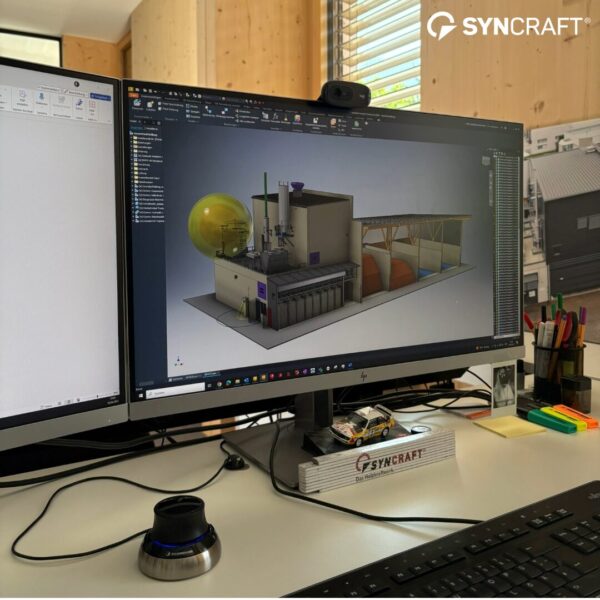
January 2, 2026
Blueprint Wallern: Construction diary phases 1+2
How is a Reversepowerplant actually created? What steps are required from the initial idea to climate-positive energy production in ongoing operation? We provide a clear answer to this question in our new blog series "B(l)aupause." Using the project in Wallern as an example, we take you to the construction site and show you transparently, practically, and step by step how regional forest residues are turned into forest residues modern energy system for electricity, heat, and green carbon. A construction diary about planning, cooperation, and the interaction of many trades—and about how defossilization and decarbonization are being implemented in concrete terms.
read more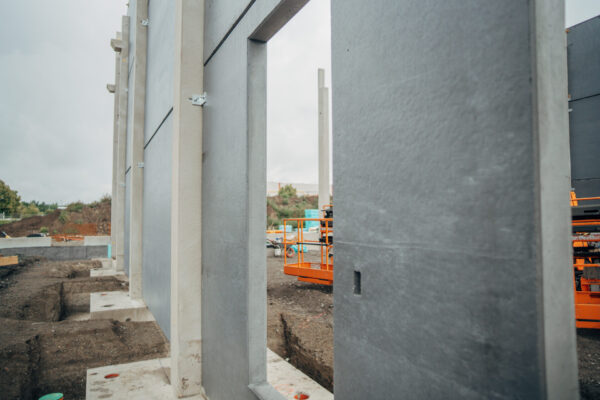
December 15, 2025
Climate-positive precast concrete elements: MARKGRAF x ecoLocked x SYNCRAFT
Climate-positive construction—what does that mean? The pilot project by MARKGRAF and ecoLocked in Kemnath provides a clear answer. The striking dark color pigments in the concrete are not just a design statement—they are visible proof of permanently bound CO₂ and active climate protection. This is made possible by green carbon, which is produced in our reverse power plants. When added to concrete, it creates a permanent CO₂ sink. Specifically, this means that over 10.68 tons of CO₂ have been permanently bound in this project. The black pigments in the concrete highlight the added value of climate protection and send a strong visual signal to the construction industry and a functioning bioeconomy.
read more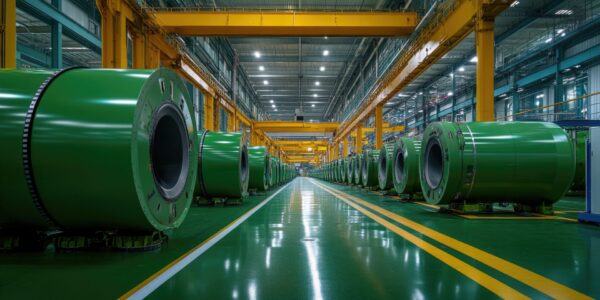
September 29, 2025
Green Carbon in metallurgy
Metallurgy is facing a historic transformation: while the steel industry is responsible for 5-7 percent of global greenhouse gas emissions, Green Carbon offers a revolutionary alternative to fossil coals. With its reverse power plants, SYNCRAFT shows how regional forest residues can be turned into sustainable carbon for the defossilization of the metal industry.
read more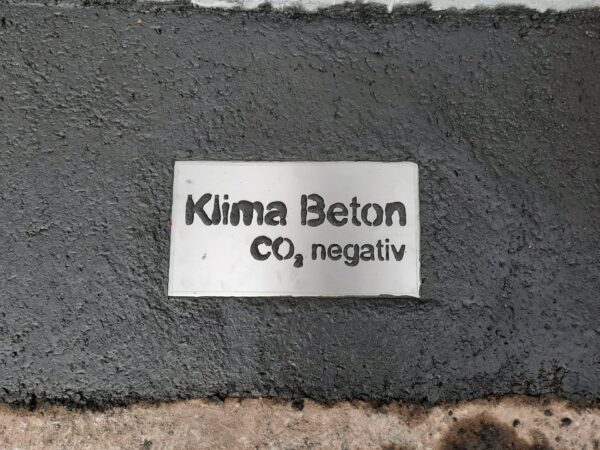
August 21, 2025
Building materials with green carbon: the future of construction
Conventional building materials are responsible for around 11% of global CO₂ emissions. To change this, we need innovative, new building materials - which not only save CO₂ emissions, but also bind CO₂ in the long term. And thus become a CO₂ sink. This is made possible by building materials that contain green carbon, for example.
read more
August 13, 2025
Certificates for climate protection
From A for application to Z for certification: REACH registration, European Biochar Certificate, C-Sink certificates - confirmed quality against climate change? We were one of the first system manufacturers to be recognized as an "Endorsed System Provider" by Carbon Standards International (CSI) in 2024. But what does this mean in concrete terms, which certifications are important and why are they so essential in our industry?
read more