Carbon sinks: from theory to climate-positive practice
May 28, 2025
#Energy transition #Climate positive
It is no longer enough to just talk about reducing emissions. In order to achieve the 1.5 degree target of the Paris Climate Agreement, we need to actively remove CO₂ from the atmosphere. This is made possible by so-called carbon sinks - systems that absorb more carbon dioxide (CO₂) from the atmosphere than they release. With our reverse power plants, we are already making a decisive contribution to the creation of effective technical carbon sinks. Read on to find out exactly how we do this, what carbon sinks actually are, what forms they take and what our Green Carbon has to do with them.
What are carbon sinks and why are they so important?
Carbon sinks are natural or technical systems that absorb more carbon dioxide (CO₂) from the atmosphere than they emit. Current scientific findings clearly show that reducing emissions alone will not be enough to limit global warming to 1.5 degrees. In its reports, the Intergovernmental Panel on Climate Change (IPCC) repeatedly emphasizes the need for negative emission technologies to remove CO₂ that has already been released from the atmosphere.
There are two ways to achieve this: natural carbon sinks and man-made, technical carbon sinks, which in the best case work hand in hand with natural carbon sinks.
Natural carbon sinks
- Forests and vegetation: Plants bind CO₂ through photosynthesis and store it as carbon.
- Oceans: The world's oceans absorb around 25% of annual CO₂ emissions.
- Soils and moors: These can store large quantities of organic carbon.
Technical carbon sinks
- BECCS (Bioenergy with Carbon Capture and Storage): Combination of bioenergy generation with CO₂ capture and storage, as implemented in the SYNCRAFT reverse power plants.
- BCR (Biochar Carbon Removal): Production of stable green carbon that can permanently store CO₂ - a key product of our Reversepowerplants.
- DACCS (Direct Air Carbon Capture and Storage): Technologies that filter CO₂ directly from the atmosphere and store it permanently.
- Enhanced Weathering: Acceleration of natural weathering processes by spreading rock flour that reacts with CO₂.
- Mineral carbonation: CO₂ binding through chemical reaction with minerals to form stable carbonates.
A comparison of the technical carbon sinks
An analysis of various technical carbon sinks reveals significant differences in terms of efficiency, sustainability and cost-effectiveness. While some processes such as DACCS or enhanced weathering have great potential, they face considerable challenges in terms of energy requirements, scalability or speed of CO₂ sequestration. Other approaches such as mineral carbonation offer permanent storage, but are energy-intensive and limited in their application. SYNCRAFT technology is characterized by its polygeneration, as Reversepowerplants combine energy generation with CO₂ removal.
We have summarized the key differences:
- DACCS
- Advantages: Direct CO₂ removal from the atmosphere, flexible use
- Disadvantages: High energy requirements, currently still limited scalability
- Efficiency: Low due to high electricity consumption (approx. 2,000 kWh/t CO₂)*
- Profitability: High costs (400-600 USD/t CO₂)*, no additional revenue yet
*Source: Climeworks; Carbon Herald
- Enhanced Weathering
- Advantages: Utilizes natural processes, great potential for CO₂ binding
- Disadvantages: Requires large land areas, works comparatively slowly
- Efficiency: Slow CO₂ binding over years to decades
- Economic efficiency: Moderate costs, depending on transportation routes and rock availability
- Mineral carbonation
- Advantages: Permanent storage, uses industrial waste materials
- Disadvantages: Energy-intensive, limited availability of suitable materials
- Efficiency: Moderate efficiency, depending on process temperature and pressure
- Profitability: High investment costs, potential revenue from building materials
- BECCS in SYNCRAFT reverse power plants
- Advantages: Combines energy generation with CO₂ storage in one process
- Efficiency: High efficiency through coupling of electricity and heat generation (30% electrical efficiency, 92% fuel efficiency)
- Economic efficiency: double benefit through energy generation and climate protection
- BCR through green carbon from reverse power plants
- Advantages: Long-term stable CO₂ storage, diverse application possibilities
- Efficiency: Binds around 30% of the CO₂ contained in forest residues in the long term
- Profitability: Creates additional value through marketable green carbon
Green Carbon for active climate protection
At SYNCRAFT, we have developed a contemporary concept that combines the generation of renewable energy with active CO₂ removal. Our Reversepowerplants use forest residues in the form of forest chips to not only generate sustainable energy, but also store carbon for the long term.

Permanent carbon sinks thanks to green carbon
In contrast to conventional coal-fired power plants, which burn fossil coal and emit CO₂, our Reversepowerplants generate valuable green carbon as well as renewable energy.
This green carbon produced in our reverse power plants plays a crucial role in long-term CO₂ storage:
- Permanent storage through strategic application
The permanent sequestration of CO₂ is achieved through the targeted use of green carbon in long-lasting applications. Whether in climate clay, as a soil conditioner or in industrial processes - the carbon remains permanently removed from the atmosphere. - Measurable Minus-CO₂
The CO₂ reduction of our Reversepowerplants can be precisely quantified using scientifically sound methods. Every kilogram of green carbon binds around 3 kilograms of CO₂ equivalents - a real contribution to decarbonization. - Certifiable climate impact
The carbon sinks created by green carbon can be certified according to international standards and thus also offer added economic value in the context of climate protection strategies. - Active defossilization through substitution of fossil raw materials
Green carbon directly replaces fossil coal in industrial applications such as steel production or cement manufacture. Every tonne of Green Carbon that replaces fossil carbon also prevents the extraction and combustion of finite resources.
The path to a climate-positive economy

The challenges of climate change require innovative solutions. Carbon sinks are therefore an essential building block for a climate-positive future. To achieve a truly climate-positive economy, we need to think beyond simply reducing emissions. At SYNCRAFT, we take a holistic approach.
By not only reducing emissions, but also actively removing CO₂ from the atmosphere and storing it in the long term, our Reversepowerplants make their contribution to climate protection. Our scientifically sound technology shows that economic progress and climate protection can go hand in hand - true to our motto: Reverse is forward.



January 21, 2026
Top Topics 2026: Will we reach the energy transition point?
New legal frameworks, increasing expansion targets for renewable energies, and growing pressure to defossilize will bring change to the energy sector in 2026. At the same time, it is becoming increasingly clear that the energy transition will not be achieved through individual technologies, but through their interaction. Renewable energies, bioenergy, Green Carbon, decarbonization, defossilization, and smart Minus-CO₂ are converging into a single system. This is precisely where the top topics for our industry in 2026 lie.
read more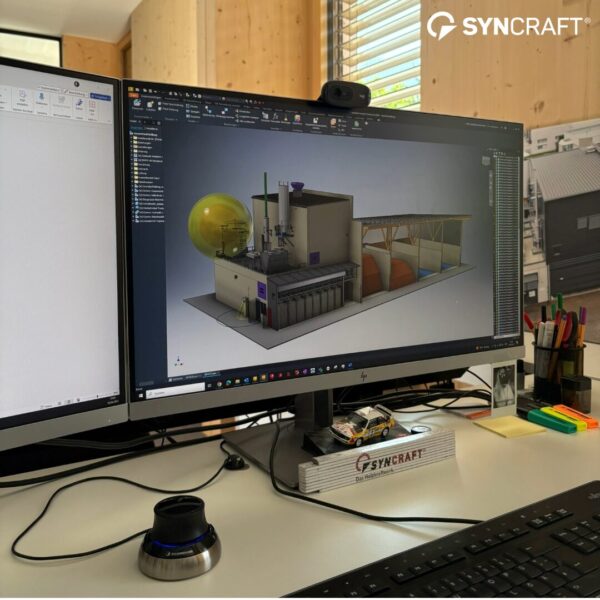
January 2, 2026
Blueprint Wallern: Construction diary phases 1+2
How is a Reversepowerplant actually created? What steps are required from the initial idea to climate-positive energy production in ongoing operation? We provide a clear answer to this question in our new blog series "B(l)aupause." Using the project in Wallern as an example, we take you to the construction site and show you transparently, practically, and step by step how regional forest residues are turned into forest residues modern energy system for electricity, heat, and green carbon. A construction diary about planning, cooperation, and the interaction of many trades—and about how defossilization and decarbonization are being implemented in concrete terms.
read more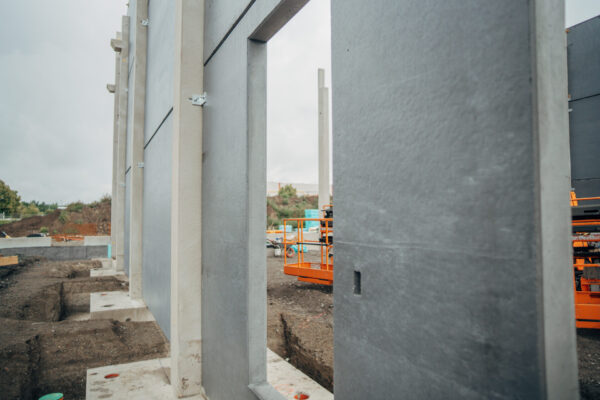
December 15, 2025
Climate-positive precast concrete elements: MARKGRAF x ecoLocked x SYNCRAFT
Climate-positive construction—what does that mean? The pilot project by MARKGRAF and ecoLocked in Kemnath provides a clear answer. The striking dark color pigments in the concrete are not just a design statement—they are visible proof of permanently bound CO₂ and active climate protection. This is made possible by green carbon, which is produced in our reverse power plants. When added to concrete, it creates a permanent CO₂ sink. Specifically, this means that over 10.68 tons of CO₂ have been permanently bound in this project. The black pigments in the concrete highlight the added value of climate protection and send a strong visual signal to the construction industry and a functioning bioeconomy.
read more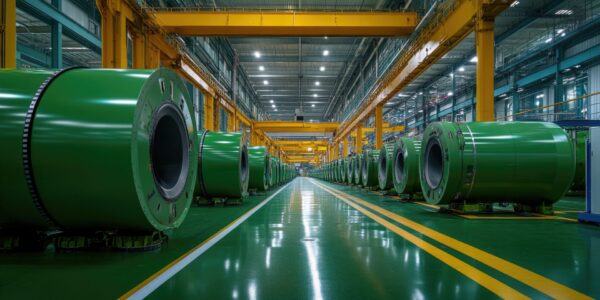
September 29, 2025
Green Carbon in metallurgy
Metallurgy is facing a historic transformation: while the steel industry is responsible for 5-7 percent of global greenhouse gas emissions, Green Carbon offers a revolutionary alternative to fossil coals. With its reverse power plants, SYNCRAFT shows how regional forest residues can be turned into sustainable carbon for the defossilization of the metal industry.
read more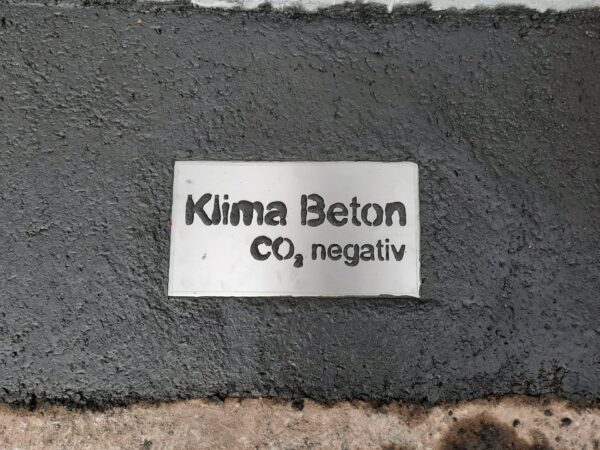
August 21, 2025
Building materials with green carbon: the future of construction
Conventional building materials are responsible for around 11% of global CO₂ emissions. To change this, we need innovative, new building materials - which not only save CO₂ emissions, but also bind CO₂ in the long term. And thus become a CO₂ sink. This is made possible by building materials that contain green carbon, for example.
read more
August 13, 2025
Certificates for climate protection
From A for application to Z for certification: REACH registration, European Biochar Certificate, C-Sink certificates - confirmed quality against climate change? We were one of the first system manufacturers to be recognized as an "Endorsed System Provider" by Carbon Standards International (CSI) in 2024. But what does this mean in concrete terms, which certifications are important and why are they so essential in our industry?
read more