Interview with Marcel Huber: Yesterday, today and tomorrow at SYNCRAFT
June 05, 2025
#SYNCRAFTInterview with Marcel Huber
From vision to reality
Interview with Marcel Huber, SYNCRAFT CEO and co-founder

SYNCRAFT CEO Marcel Huber
The energy transition needs innovative solutions - and this is exactly where SYNCRAFT comes in with its revolutionary reverse power plants. In an interview with our CEO Marcel Huber, you can find out how forest residues are not only used to produce renewable energy, but also Green Carbon , and why this technology is changing and shaping the future of sustainable energy supply.
The story of how it all began: from university to GreenTech pioneer
Marcel, how did the idea for SYNCRAFT and the reverse power plants come about?
Our journey began back in 2009 at the Management Center Innsbruck (MCI), where we developed our unique and patented biomass conversion process - the so-called Floating Fixed Bed Gasifier. This innovation became the foundation for what SYNCRAFT is today. We have created a technology that truly moves the world forward in terms of sustainable energy solutions.
In the first few years, we worked exclusively on development with just a handful of employees before we were able to reach the commercialization stage with our technology. Today, we employ over 60 people and have over 40 Reversepowerplants built.
The revolutionary concept: Why "Reversepowerplant"?
What does the Reversepowerplants so special and why the name?
The name "Reversepowerplant" illustrates our revolutionary principle: In contrast to conventional coal-fired power plants, which mine fossil coal to generate energy, we produce renewable energy and green carbon from renewable raw materials - i.e. forest residues in the form of wood chips - at the same time.
Our unique Reversepowerplants offer:
- Renewable energy: electricity and heat from forest residues in the form of forest chips
- Green GasFor a wide range of industrial applications
- Green Carbon: As a sustainable substitute for fossil carbon
- Minus-CO₂: active CO₂ removal from the atmosphere
What makes our solution truly revolutionary is that we have created a system that not only generates green energy, but also has a Minus-CO₂. Our Reversepowerplants actively remove CO₂ from the atmosphere by storing it in green carbon - making them not only climate-neutral, but also climate-positive.

Defossilization through green carbon
How does green carbon contribute to defossilization?
SYNCRAFT's green carbon stores around 30% of the CO₂ contained in forest residues and can become a permanent CO₂ sink, depending on how it is reused. At the same time, it has a wide range of applications in industry:
- Metal industry: replacement for fossil carbon in steel production
- Building material production: application in climate clay for long-term CO₂ sequestration
- Industrial processes: Substitutes for fossil raw materials
A sober look into the future reveals an enormous demand for green carbon in the metallurgical industry and in the production of building materials. With our green carbon, we are already achieving the European Union's goal of providing 1 kg of green hydrogen for EUR 3 by 2030.
Innovation and future prospects
What developments do you expect in the next few years?
Polygeneration: the key to success
What are overlooked opportunities in the CleanTech sector?
The polygeneration approach, especially with green carbon and biomass, represents a significant opportunity. The production of multiple products from the feedstock achieves greater resilience - similar to other technologies such as hydrogen production, where oxygen is also produced.
This multi-stage use case approach is common practice with fossil fuels, which partly explains why they are not as expensive. By creating multiple value streams from renewable resources, we can make clean energy economically competitive while providing environmental benefits.
Challenges and solutions
What challenges do you see for the future of clean energy?
Cost transparency remains a significant challenge. We also need to overcome the political knowledge gap on how to design a physically proven, stable energy supply instead of just following ideology.
We cannot compete with the marginal cost structures of established fossil fuels - nobody in the renewable energy sector can. We must not compare apples with oranges here, but must consider the installation and operating costs over the entire life cycle.
Location Tirol: Ideal conditions for innovation
How does the location in Schwaz, Tyrol, influence SYNCRAFT's development?
Our location has considerable advantages:
- Strong link to forest residues: Traditionally strong use of wood in Austria
- High-tech environment: access to highly qualified talent
- Sustainable forestry: Perfectly aligned with our resource requirements
- Innovation culture: support for GreenTech developments

SYNCRAFT location Schwaz, Tyrol
Vision for a climate-positive future
What vision are you pursuing with SYNCRAFT?
Our aim is to make a relevant contribution to the green transition - in terms of both ecological and economic sustainability. The motto "green at any price" leads nowhere because it lacks a convincing incentive and a meaningful business case.
Our entire team is united by the conviction that we never want to have to tell our children that we haven't done everything we can to leave them an intact earth worth living on. With our combination of energy generation and innovative Minus-CO₂, we are pursuing a dual strategy of defossilization and decarbonization.
Political framework conditions for climate protection
What political measure would you suggest for climate protection?
A globally coordinated, increasing carbon tax or fee that grows predictably over time. This would create the market conditions needed to accelerate defossilization across all industries and drive investment in climate-positive technologies like our Reversepowerplants .
Conclusion: Reverse is forward with SYNCRAFT
The future of energy supply lies in intelligent, synergistic systems. SYNCRAFT Reversepowerplants integrate bioenergy, green carbon and CO₂ removal into a seamless system - merging negative CO2 with renewable energy production.
Modern bioenergy is no longer just about generating renewable energy - it's about polygeneration. Real climate impact comes from intelligent, synergistic systems. - Marcel Huber, CEO SYNCRAFT


January 21, 2026
Top Topics 2026: Will we reach the energy transition point?
New legal frameworks, increasing expansion targets for renewable energies, and growing pressure to defossilize will bring change to the energy sector in 2026. At the same time, it is becoming increasingly clear that the energy transition will not be achieved through individual technologies, but through their interaction. Renewable energies, bioenergy, Green Carbon, decarbonization, defossilization, and smart Minus-CO₂ are converging into a single system. This is precisely where the top topics for our industry in 2026 lie.
read more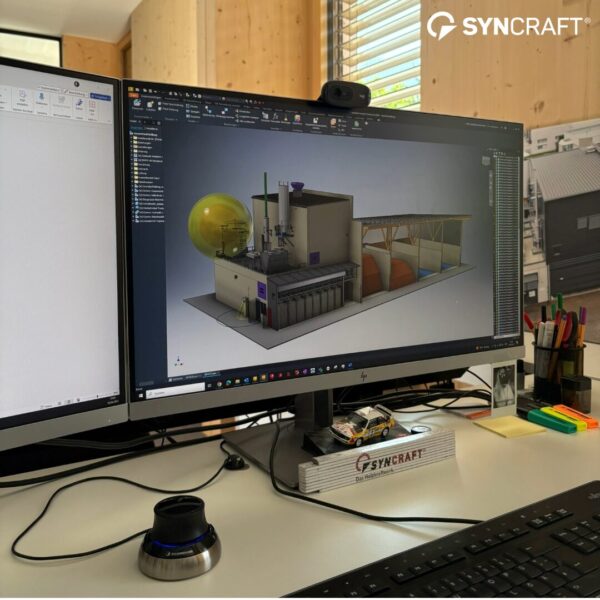
January 2, 2026
Blueprint Wallern: Construction diary phases 1+2
How is a Reversepowerplant actually created? What steps are required from the initial idea to climate-positive energy production in ongoing operation? We provide a clear answer to this question in our new blog series "B(l)aupause." Using the project in Wallern as an example, we take you to the construction site and show you transparently, practically, and step by step how regional forest residues are turned into forest residues modern energy system for electricity, heat, and green carbon. A construction diary about planning, cooperation, and the interaction of many trades—and about how defossilization and decarbonization are being implemented in concrete terms.
read more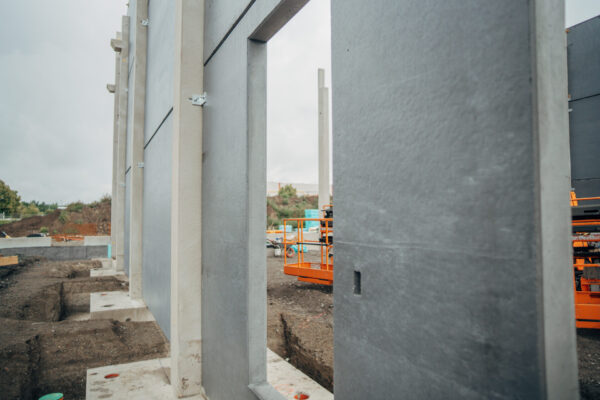
December 15, 2025
Climate-positive precast concrete elements: MARKGRAF x ecoLocked x SYNCRAFT
Climate-positive construction—what does that mean? The pilot project by MARKGRAF and ecoLocked in Kemnath provides a clear answer. The striking dark color pigments in the concrete are not just a design statement—they are visible proof of permanently bound CO₂ and active climate protection. This is made possible by green carbon, which is produced in our reverse power plants. When added to concrete, it creates a permanent CO₂ sink. Specifically, this means that over 10.68 tons of CO₂ have been permanently bound in this project. The black pigments in the concrete highlight the added value of climate protection and send a strong visual signal to the construction industry and a functioning bioeconomy.
read more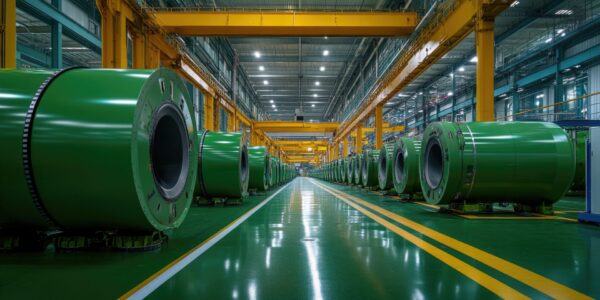
September 29, 2025
Green Carbon in metallurgy
Metallurgy is facing a historic transformation: while the steel industry is responsible for 5-7 percent of global greenhouse gas emissions, Green Carbon offers a revolutionary alternative to fossil coals. With its reverse power plants, SYNCRAFT shows how regional forest residues can be turned into sustainable carbon for the defossilization of the metal industry.
read more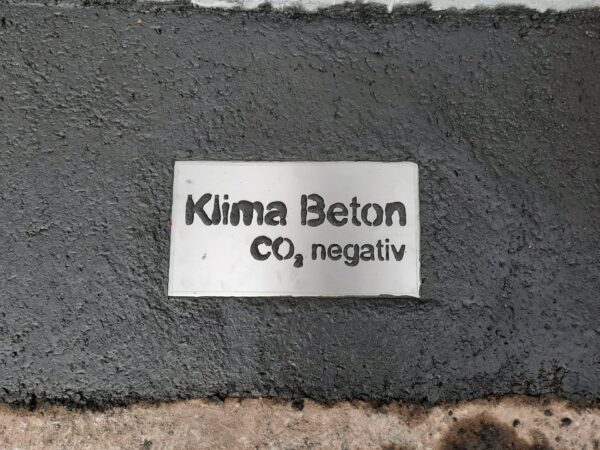
August 21, 2025
Building materials with green carbon: the future of construction
Conventional building materials are responsible for around 11% of global CO₂ emissions. To change this, we need innovative, new building materials - which not only save CO₂ emissions, but also bind CO₂ in the long term. And thus become a CO₂ sink. This is made possible by building materials that contain green carbon, for example.
read more
August 13, 2025
Certificates for climate protection
From A for application to Z for certification: REACH registration, European Biochar Certificate, C-Sink certificates - confirmed quality against climate change? We were one of the first system manufacturers to be recognized as an "Endorsed System Provider" by Carbon Standards International (CSI) in 2024. But what does this mean in concrete terms, which certifications are important and why are they so essential in our industry?
read more